
Moss from roof tiles
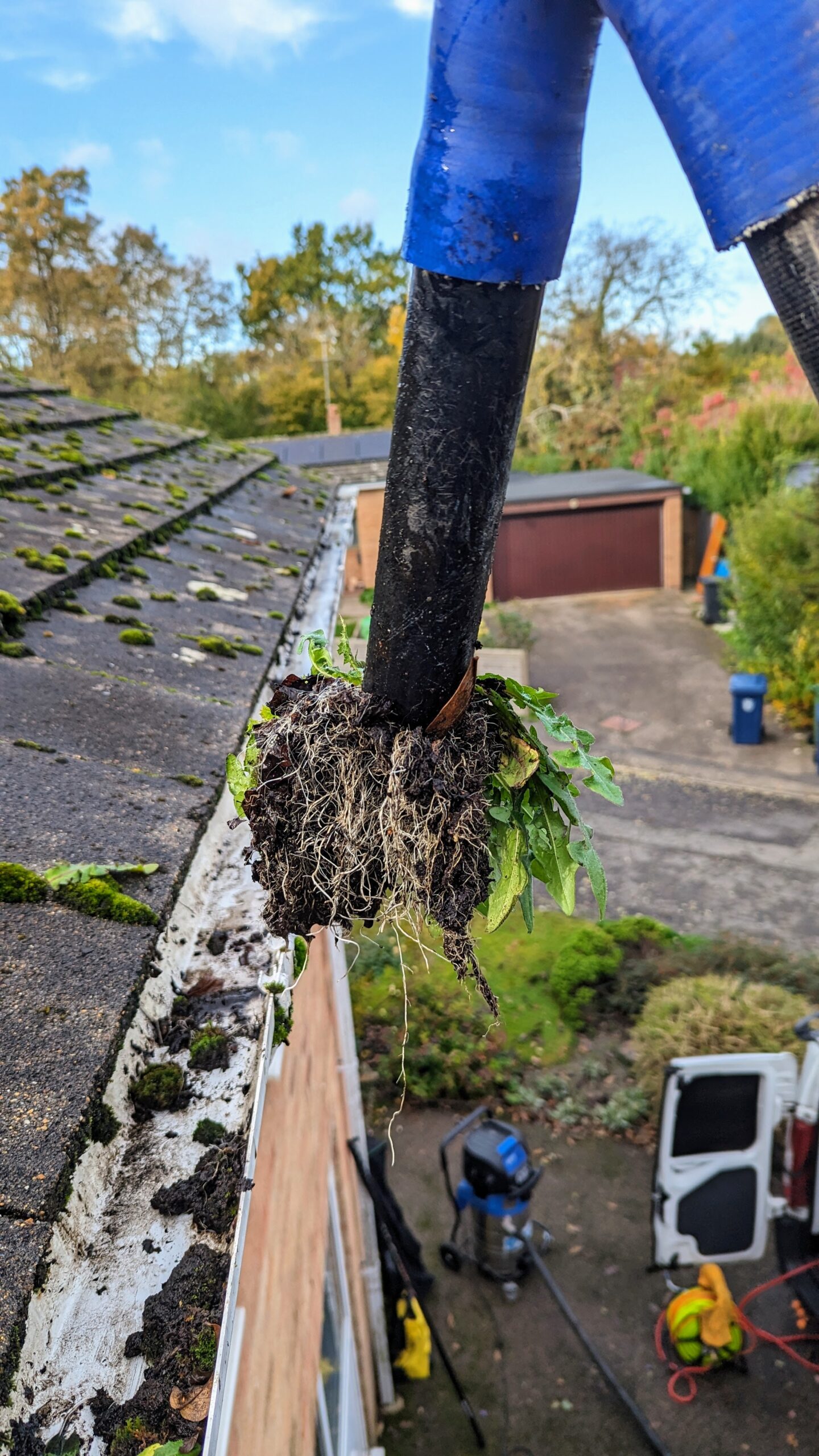
As roof moss loosens, rain carries clumps into the gutter. It can form a dense, wet mass that is much harder to shift than loose leaves.
A handful of leaves might seem harmless. But when moss, roots and debris prevent rainwater escaping, the consequences can reach well beyond the gutter.
From recurring blockages to overflowing gullies and damp walls, here’s what we’ve learned from cleaning gutters around Cambridge.
Most gutter problems develop quietly. A few pieces of moss fall from the roof. Leaves collect around an outlet. Rain washes grit into the channel. Months later, water starts spilling over the edge — sometimes even though the rest of the gutter looks relatively clear.
This guide explains the causes, the warning signs and what a thorough professional clean involves, drawing on the problems we regularly encounter around Cambridge.
Leaves are only one part of the story. Gutters also collect material from the roof itself — and some of the most persistent obstructions are hidden at the outlet.
As roof moss loosens, rain carries clumps into the gutter. It can form a dense, wet mass that is much harder to shift than loose leaves.
Nearby trees can deposit large amounts of debris in a short period. Twigs can lodge across narrow outlets and trap further material.
Silt and sand settle at the bottom of the channel. Loose mortar from ridges, valleys or pointing can create surprisingly heavy obstructions.
When organic debris stays damp, seeds can germinate. Visible plants are often a sign that the gutter has been holding material for some time.
Rainwater diverters and tight bends can catch debris inside a downpipe. The blockage may be invisible from the ground and from the gutter above.
A gutter that slopes the wrong way can hold standing water and sediment. A leaking joint can cause dripping even when the gutter itself is clean.
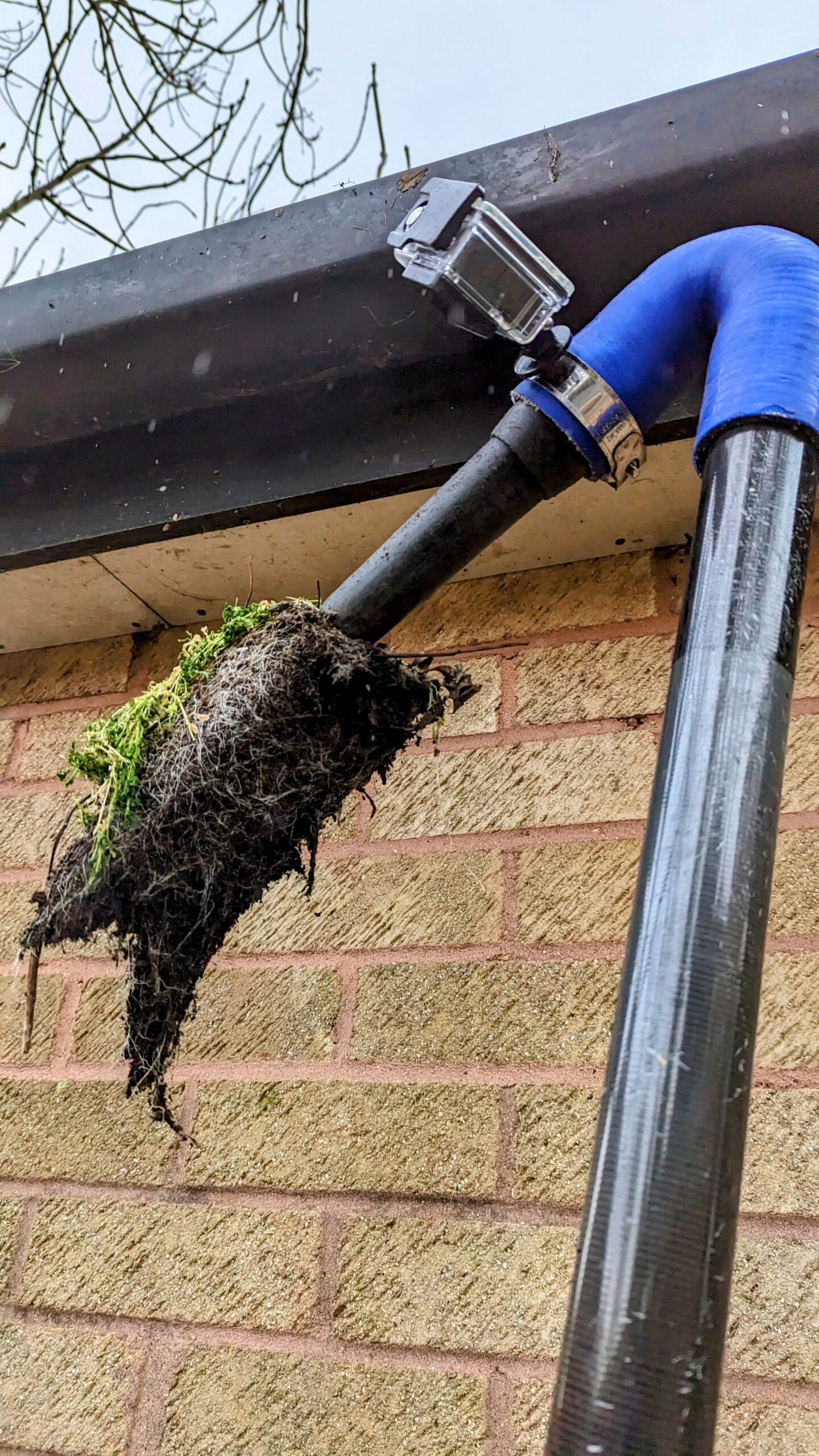
These are actual blockages we have encountered. Notice how different the material looks — and how easily a small outlet or downpipe can become the critical restriction.
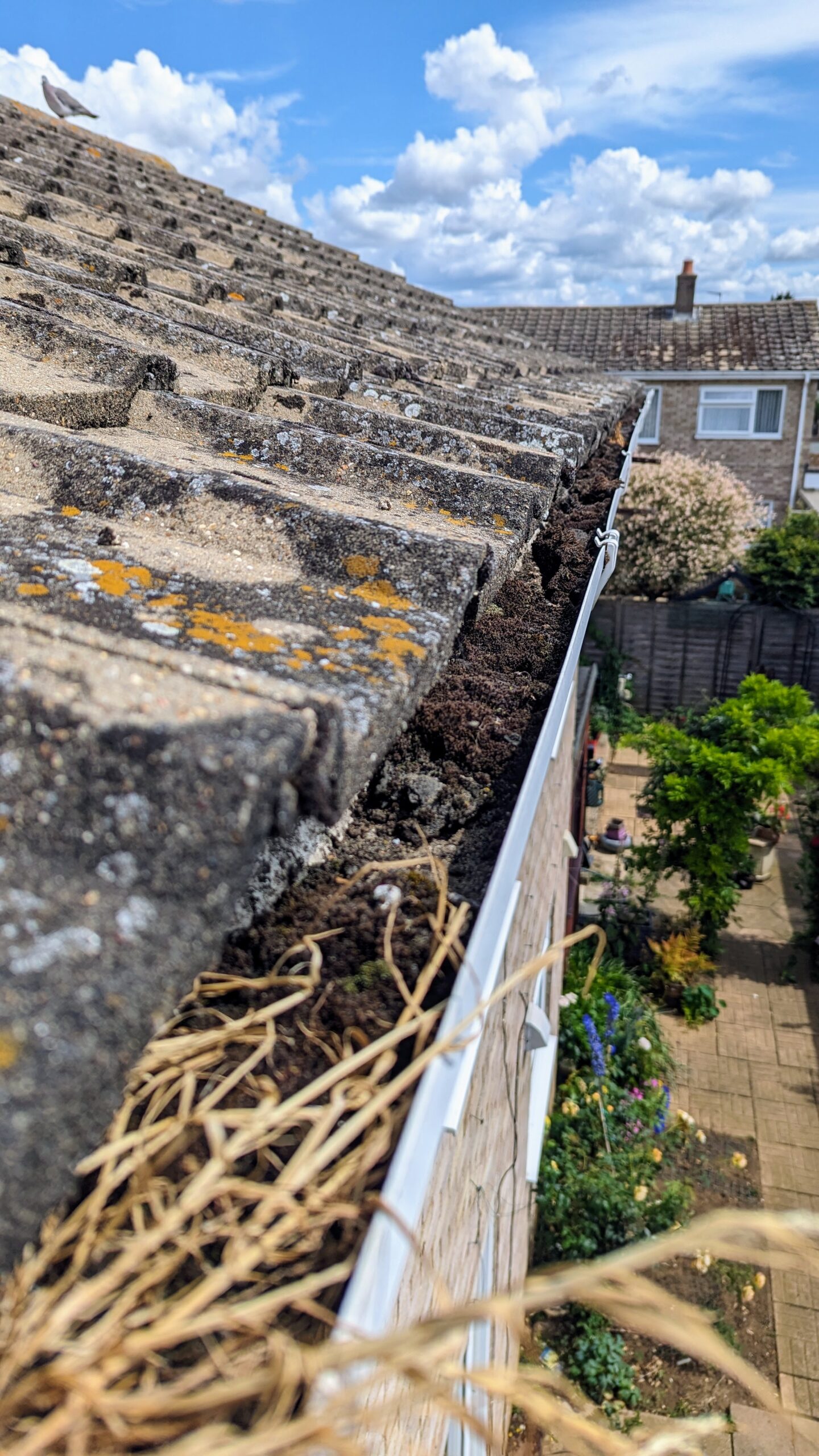
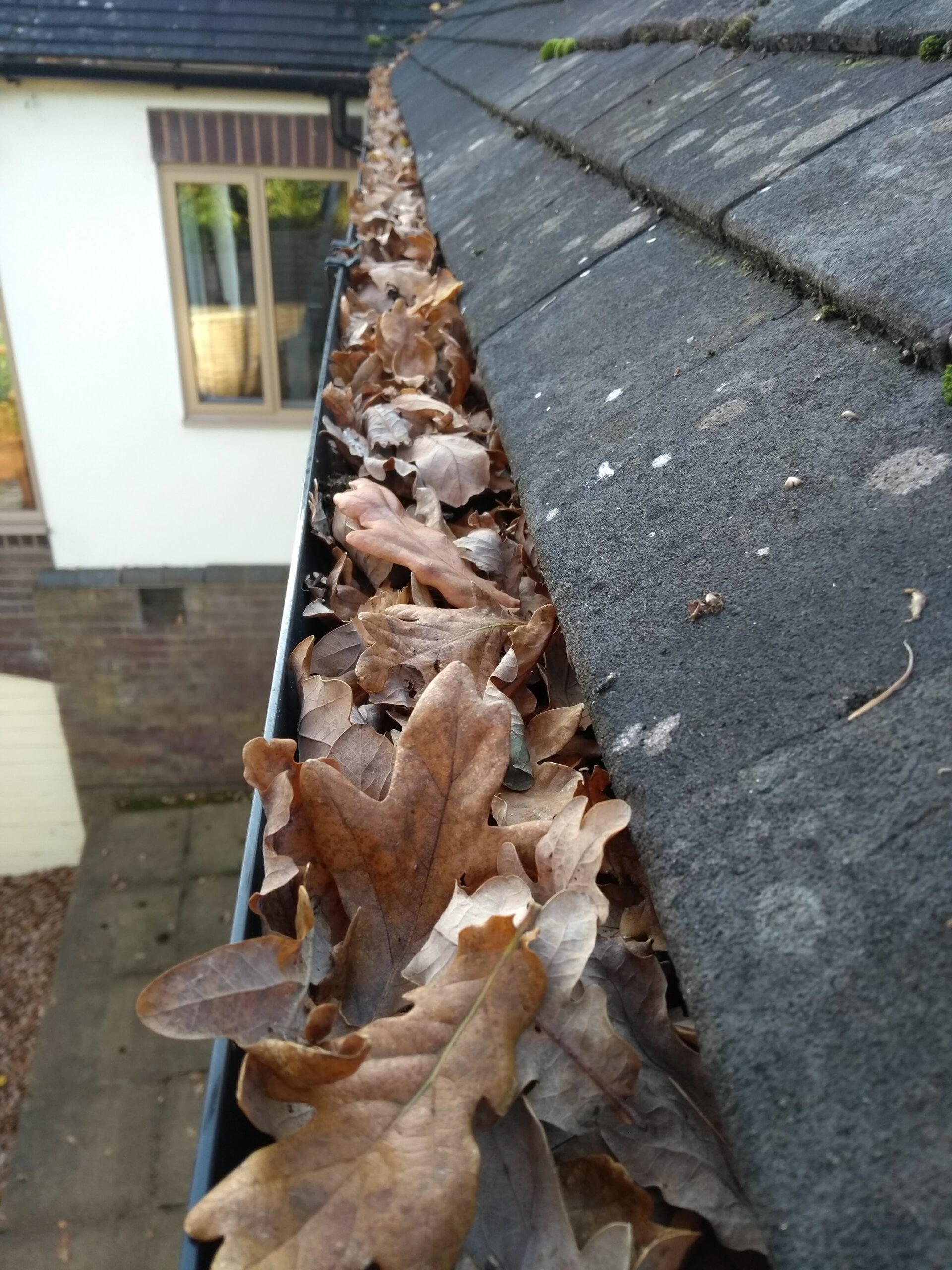
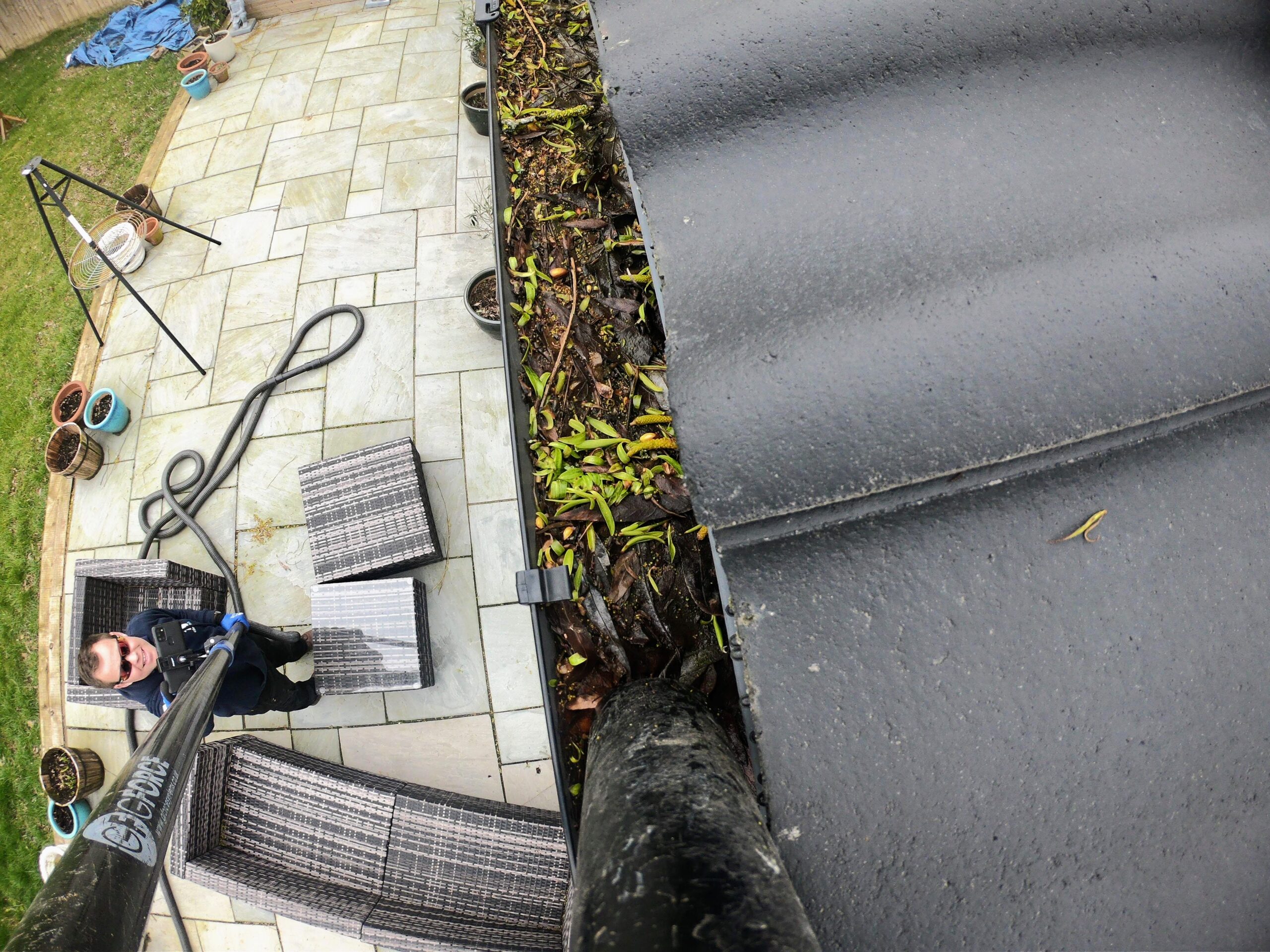
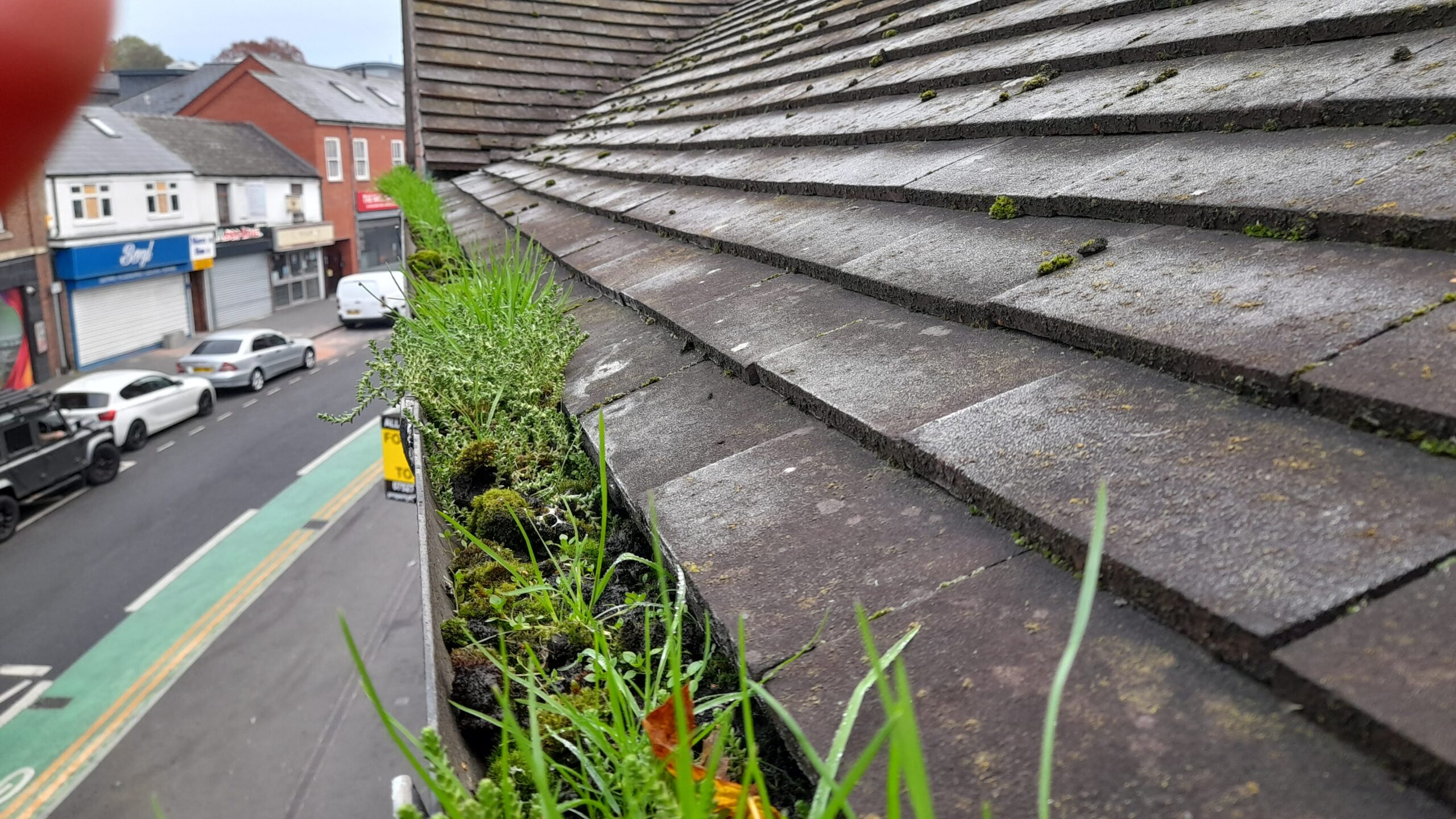
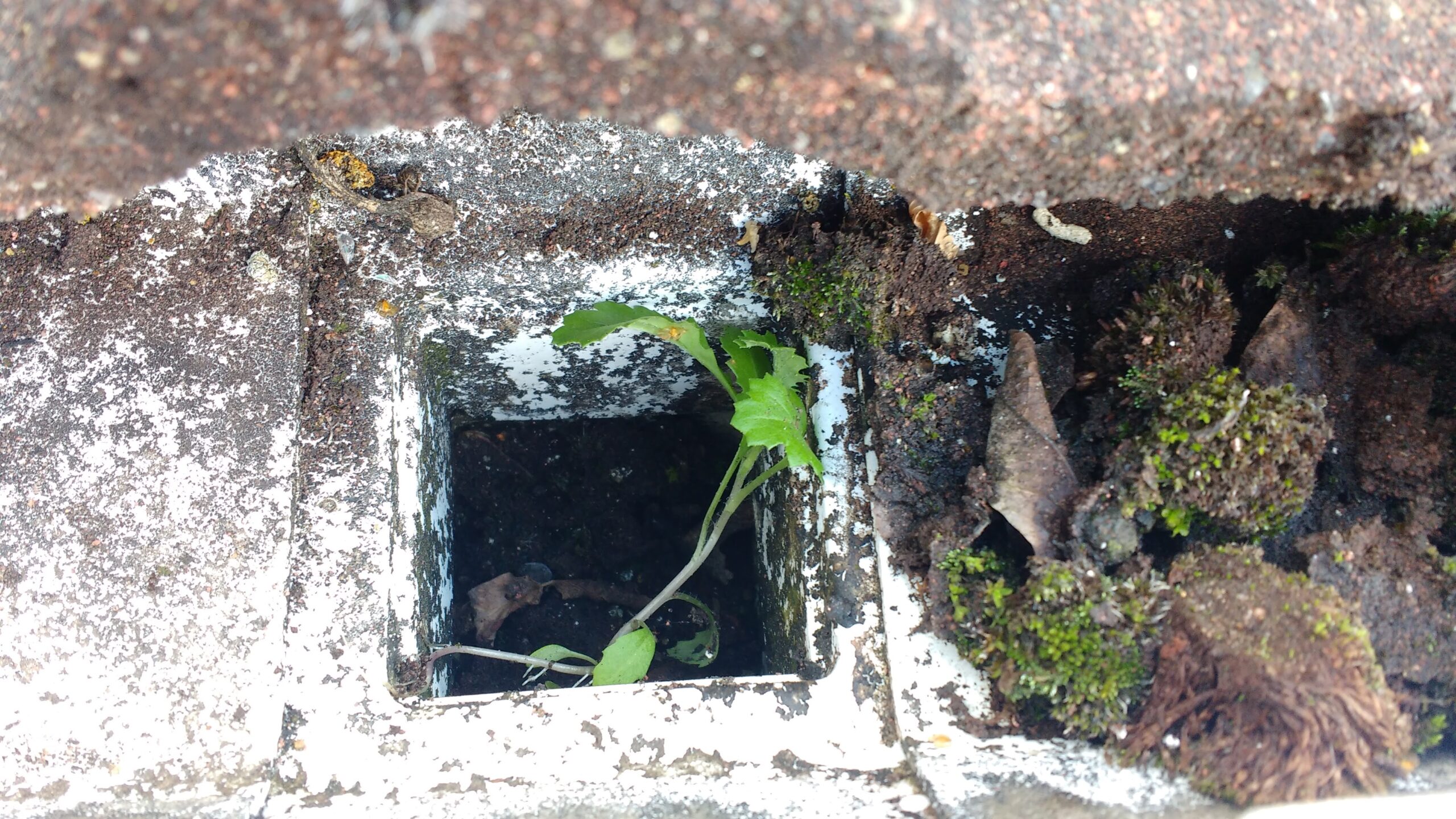
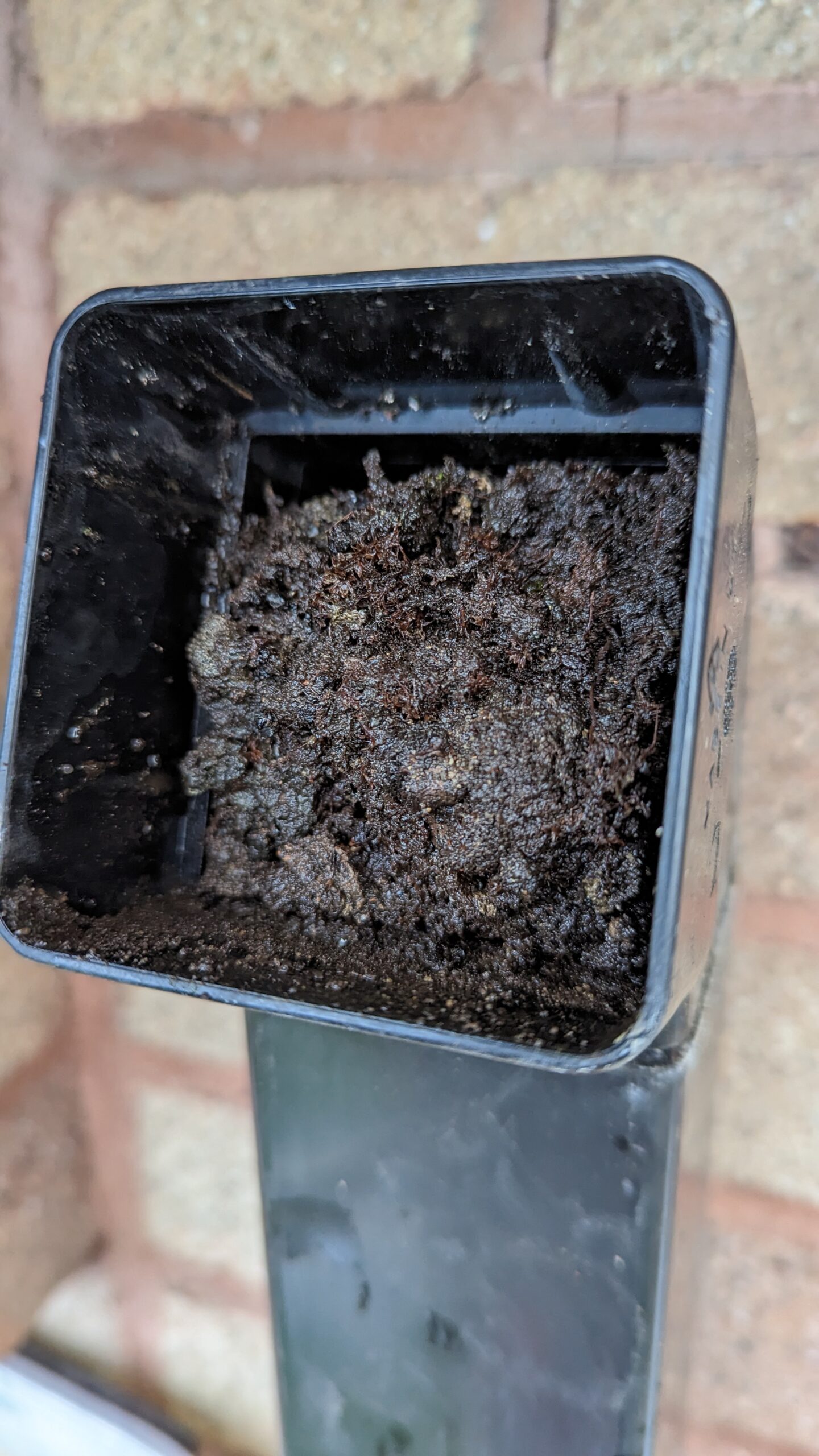
The blocked downpipe is particularly important: clearing the visible gutter alone may not restore drainage if water cannot pass through the outlet or pipe.
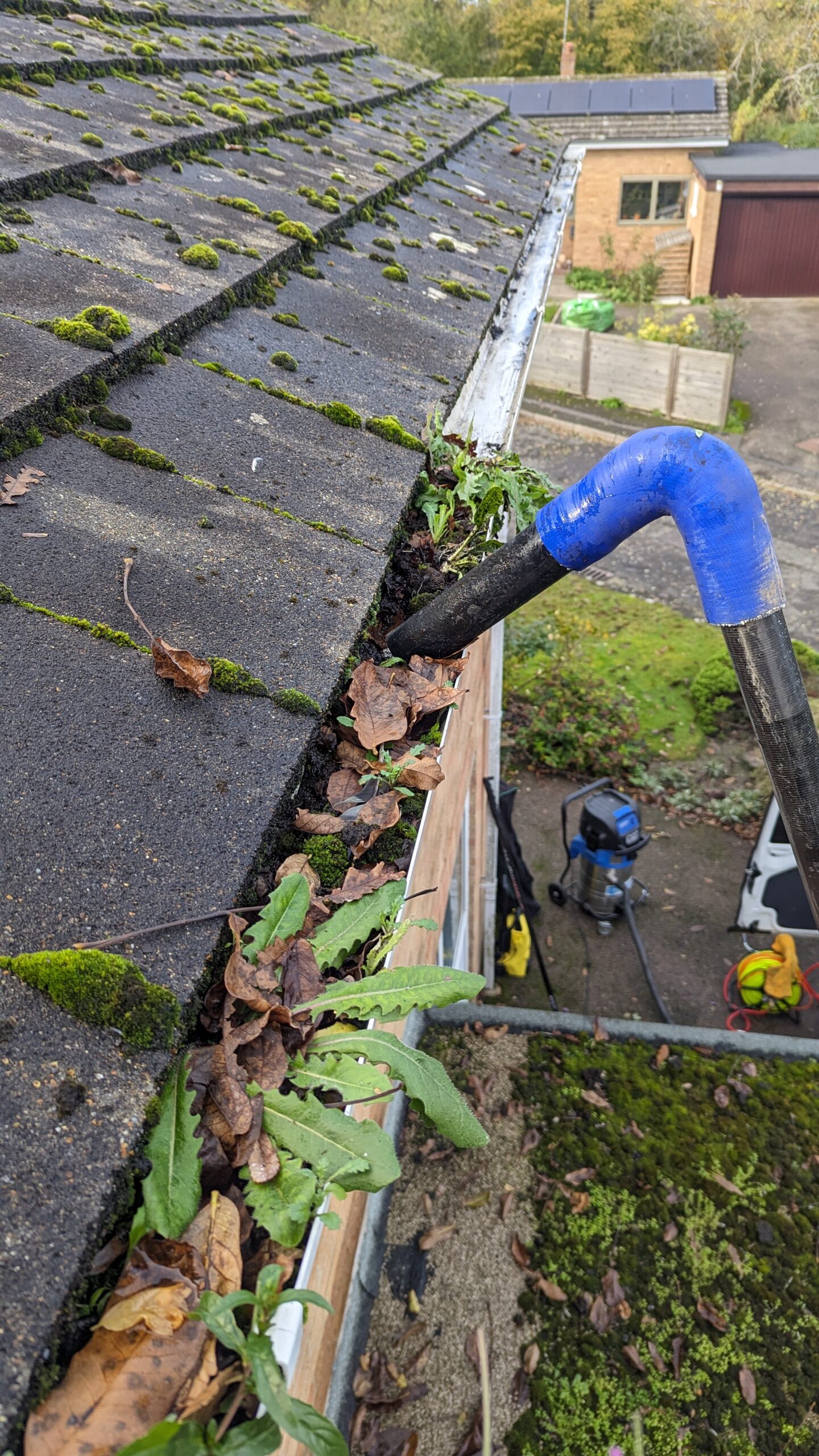
Wet leaves and moss break down into a growing medium. Seeds arrive on the wind or from birds, then take root. By the time grass or weeds are visible above the gutter, the drainage channel may already be substantially obstructed.
We've also found unexpected objects in gutters — including Nerf darts, firework sticks and even a Barbie doll. Almost anything that lodges near an outlet can begin a blockage.
Repeated blockages are often a symptom of the surrounding conditions, not just how recently the gutter was cleaned. A mossy roof continually sheds material. Trees can refill a channel each autumn. Poor falls leave sediment behind.
We also encounter rainwater diverters that catch debris part-way down a downpipe. The gutter above may be empty, yet water still cannot escape freely.
That is why inspecting the outlet and checking for underlying defects matters. Cleaning removes debris; it does not automatically repair an incorrectly sloped gutter or a worn joint.
A blocked gutter is not simply an untidy roofline. During heavy rain, large amounts of water can be directed onto parts of a building or garden that were never designed to receive it.
Repeated overflow can saturate brickwork or render. Depending on the building, its condition and the source of the moisture, this can contribute to penetrating damp, damaged plaster and mould indoors. Damp should be properly investigated rather than automatically blamed on gutters.
Water running behind or over the gutter can repeatedly wet fascias, soffits, window frames and painted timber. Over time, paint may fail and vulnerable wood may decay.
Persistent streams down walls can leave staining, encourage algae growth and worsen existing defects in pointing, render or masonry. In freezing weather, trapped water can add to deterioration in susceptible areas.
When a blocked gully or overflowing downpipe discharges water at ground level, concentrated flow can scour soil, wash away gravel or bedding material and undermine the edges of paths or paving. Persistent pooling near a building also deserves investigation.
Gutters and downpipes are intended to direct rainwater towards suitable drainage. Overflow can instead concentrate it beside external walls, entrances and foundations, increasing the risk of local flooding or moisture problems.
Not every drip is caused by a blockage. Split fittings, worn seals, leaking joints and gutters with an incorrect fall can continue to leak after debris has been removed.
The aim is not simply to remove what can be seen from the ground. It's to establish where the debris is, clear the drainage route and check the result.
1 min 34 sec · Camera attached to the gutter-vacuum nozzle, showing the cleaning process from the point of work.
25 sec · Drone footage of gutter cleaning at a large country house.
We can usually remove debris from the roof gutters, clear the outlets and empty accessible downpipes down to ground level. We use camera inspection to check the guttering and can test water flow where practical.
But the drainage system doesn't necessarily end at the bottom of the downpipe. Water may pass into a ground-level gully, buried pipe or underground soakaway. A blockage or break below ground can cause water to back up even when the gutters above are completely clear.
We don't excavate, repair or replace broken underground drainage pipes, or diagnose and repair buried soakaways. If water still backs up at ground level after the accessible guttering and downpipe are clear, the underground drainage may need a specialist investigation, such as a drain CCTV survey.
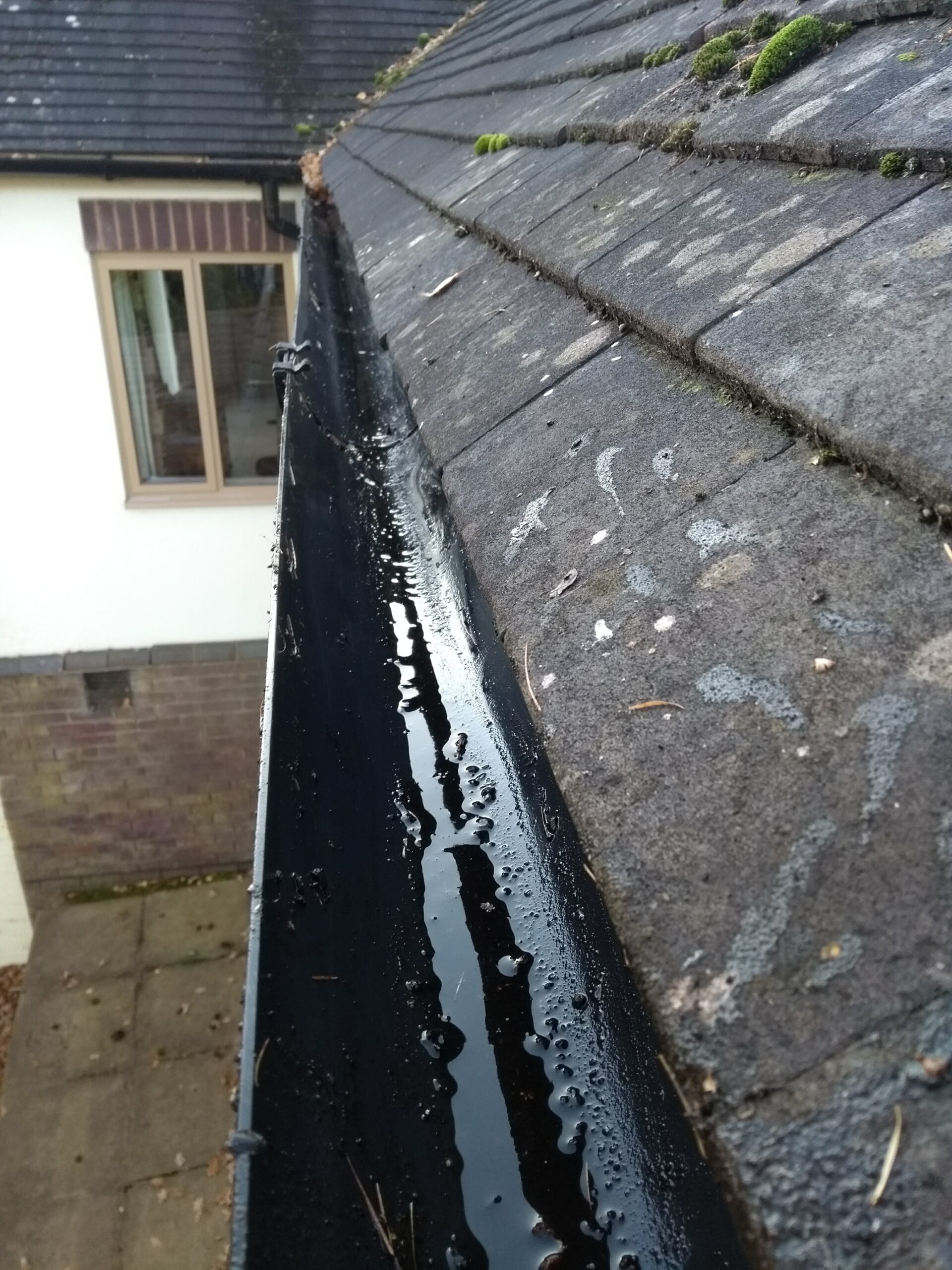
The visible difference is satisfying, but the more important result is a clear route for rainwater to reach the outlet.
 DebrisCleared
Gutter guards sound like a permanent solution, but in our experience they often create more problems than they solve. They can stop larger leaves while allowing smaller material through. Debris can also collect on or become caught in the guard, making the gutter harder to empty when maintenance is needed.
Downpipe baskets can be useful in certain situations. The trade-off is where debris accumulates: the basket may stop material entering the pipe, but it can itself become blocked at the outlet.
There is no universal answer. Roof moss, nearby trees, gutter design and ease of future access all matter. A system that can be inspected and cleaned is often preferable to one that promises to need no maintenance.
The most reliable prevention is to understand what is entering the gutter, check the drainage points and maintain the system at intervals suited to the property.
For most homes, once a year after the autumn leaves have fallen is a sensible starting point. Properties beneath trees, or with roofs that shed significant moss, may need attention more often.
Select a season to see what to watch for throughout the year.
Once the leaves have finished falling, clear accumulated debris once the main leaf fall has finished. The exact timing depends on the trees around your property.
These are two different kinds of maintenance, and it's useful to know which one you need.
Removing debris from inside the gutters and clearing outlets to restore drainage. This addresses the functional problem of rainwater being unable to flow away.
Gutter emptying plus cleaning the visible exterior guttering, fascias and soffits. This deals with drainage and the appearance of the roofline.
Minor leaking-joint repairs may be possible where appropriate. Cleaning does not correct every defect or guarantee that worn components will stop leaking.
Look for overflow during rainfall, visible debris or plants, or persistent damp patches below a section. Some obstructions — especially at outlets and diverters — are only evident during inspection.
It may solve overflowing caused by a blockage, but a leaking joint, damaged fitting or incorrect fall is a separate issue that may need repair.
Some low, safely accessible gutters may be manageable, but working at height brings significant risks. Avoid leaning from ladders or attempting to reach difficult sections; professional ground-based equipment can often reduce the need to work at height.
Annually after leaf fall is a good general starting point. Heavy tree cover, roof moss and known problem outlets can justify more frequent checks.
The downpipe outlet, a bend or a rainwater diverter may be blocked, or the gutter may not have the correct fall. An inspection can help identify the cause.