

It can spread
Individual colonies can enlarge and new growth can appear elsewhere. Over time, more of the panel surface may become obscured.
Clean It Cambridge · Solar panel advice
Those small white patches on your solar panels might look harmless. Left untreated, however, lichen can spread, obstruct sunlight and become increasingly difficult to remove.
We've restored solar panels around Cambridge that hadn't been cleaned for many years. Here's what we've learned about lichen, why it matters and what can be done about it.
Recognising the problem
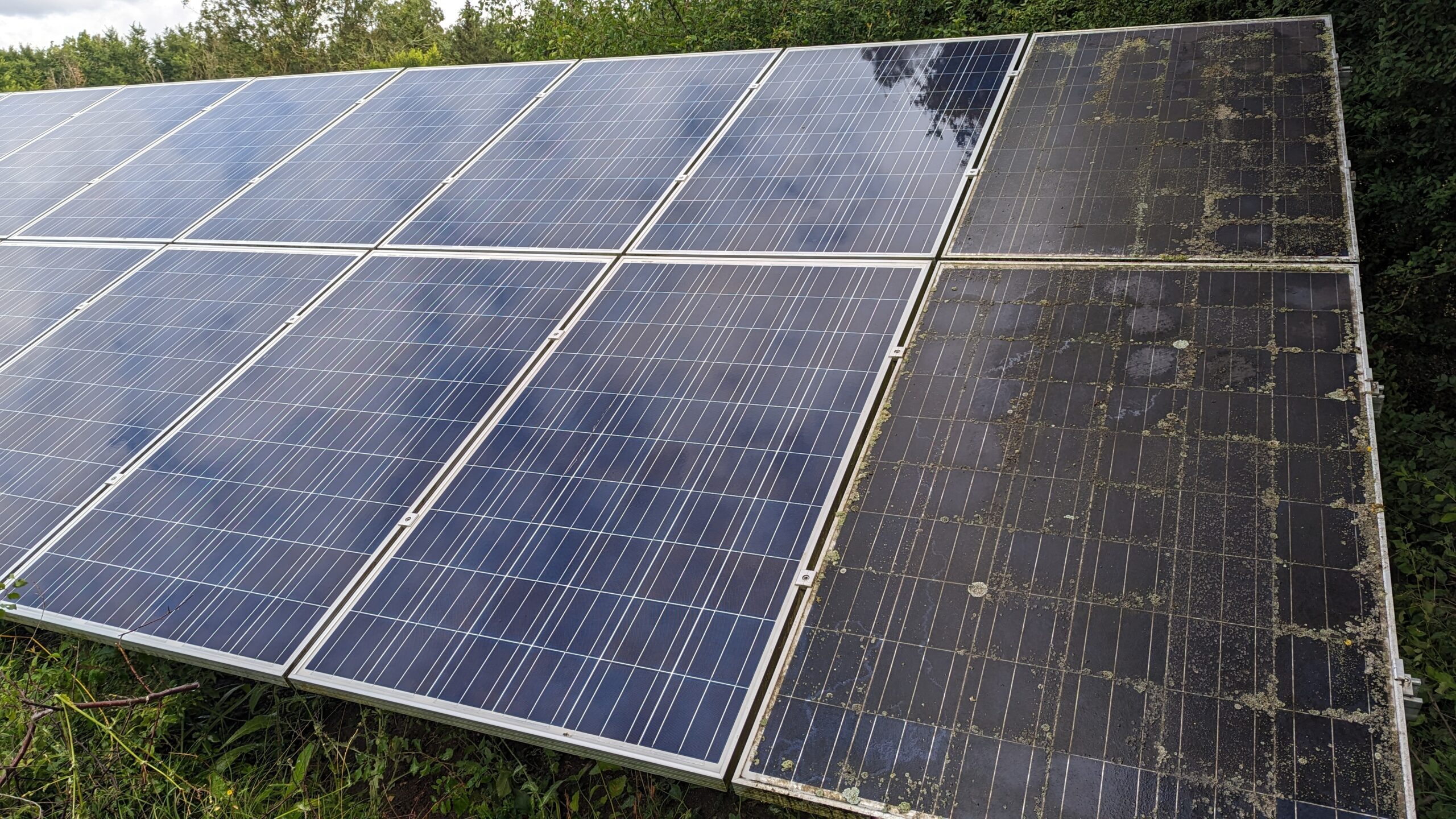
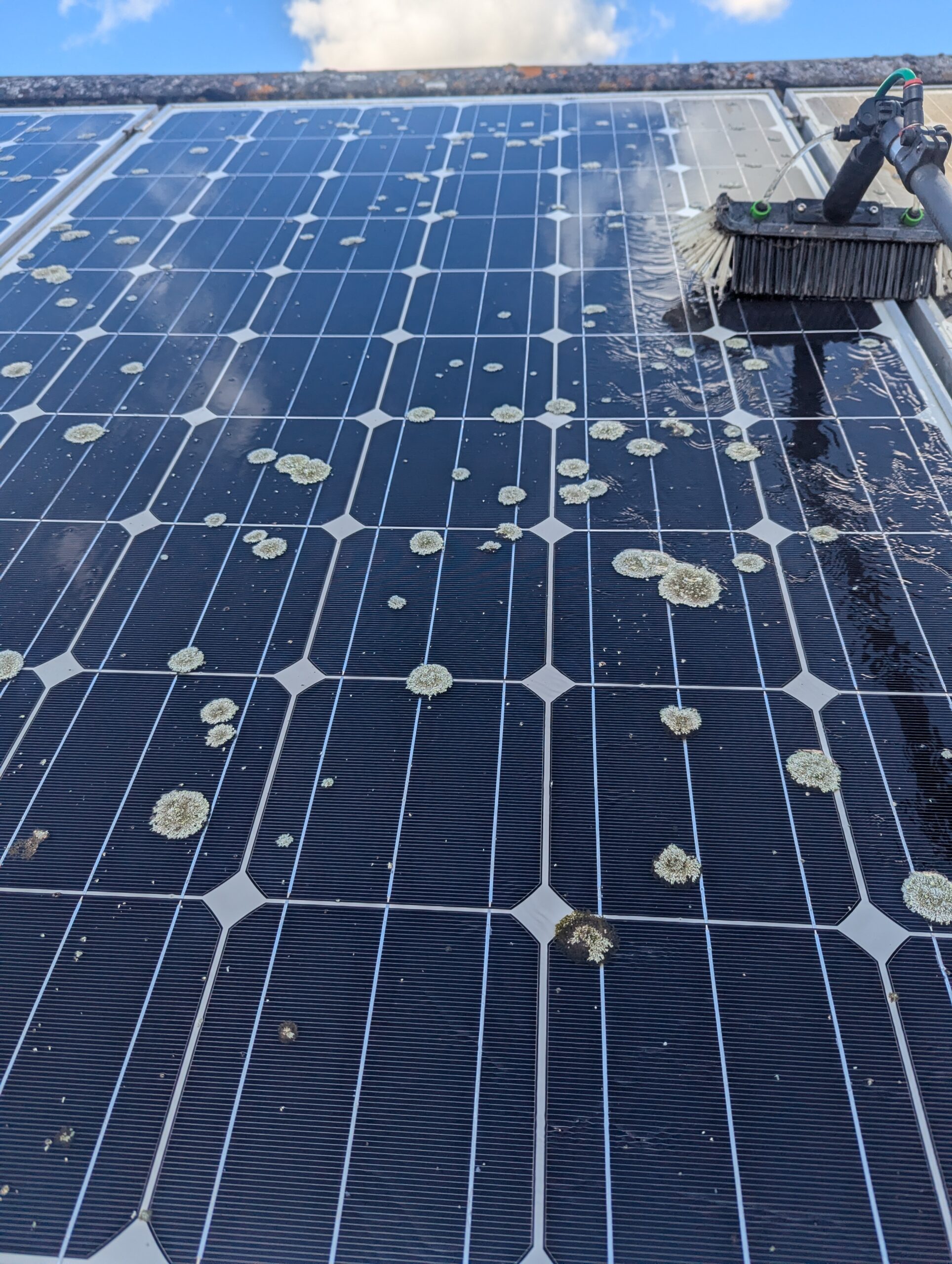
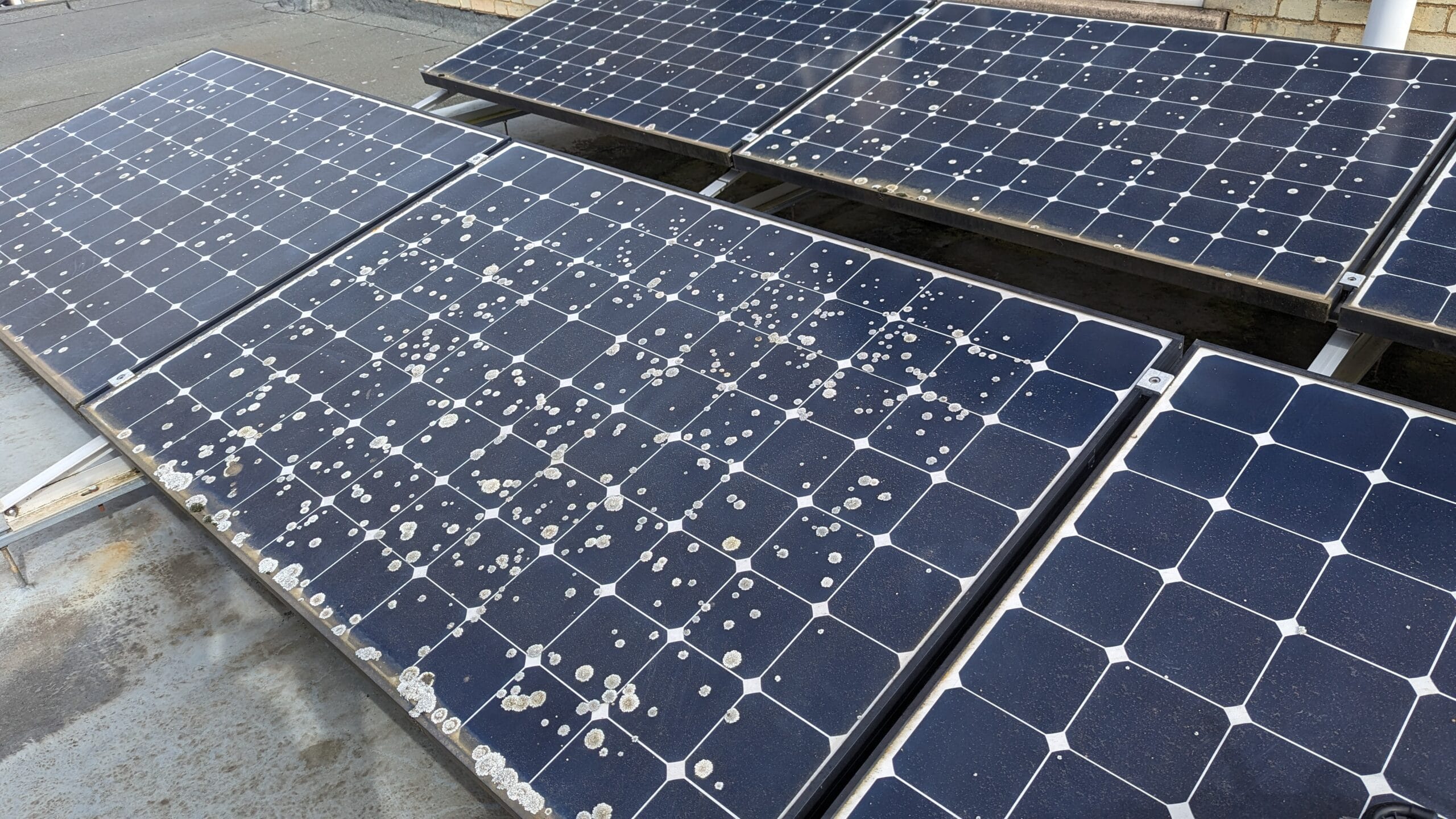
If you've noticed small white or pale grey circles on your solar panels, they may be colonies of lichen.
Lichen is a biological partnership involving a fungus and a photosynthetic organism. It can establish itself on exposed surfaces, including solar panel glass.
Unlike ordinary dust or loose dirt, established lichen can adhere firmly to the surface. It often appears as scattered circular patches before becoming more widespread.
In our experience, panels that have gone five years or more without cleaning are sometimes affected, although the rate of growth varies greatly between properties.
More than a cosmetic problem
A few small patches might not seem urgent. But leaving contamination to develop for years can create a much bigger job.
Individual colonies can enlarge and new growth can appear elsewhere. Over time, more of the panel surface may become obscured.
Long-established lichen is generally more demanding to remove than light contamination. Restoration may require specialist treatment rather than routine cleaning.
Lichen obstructs incoming sunlight. Widespread or uneven contamination may reduce the electricity your solar installation produces.
Electricity generation
Yes — particularly when contamination becomes extensive.
Solar panels depend on light reaching their photovoltaic cells. When parts of the glass are covered by lichen, less light can pass through those areas.
The effect isn't necessarily proportional to the visible area covered. Solar cells are electrically interconnected, so uneven shading can sometimes affect the output of a larger section of a panel.
Research into photovoltaic soiling supports the importance of contamination patterns, as well as the overall amount of dirt or biological growth.
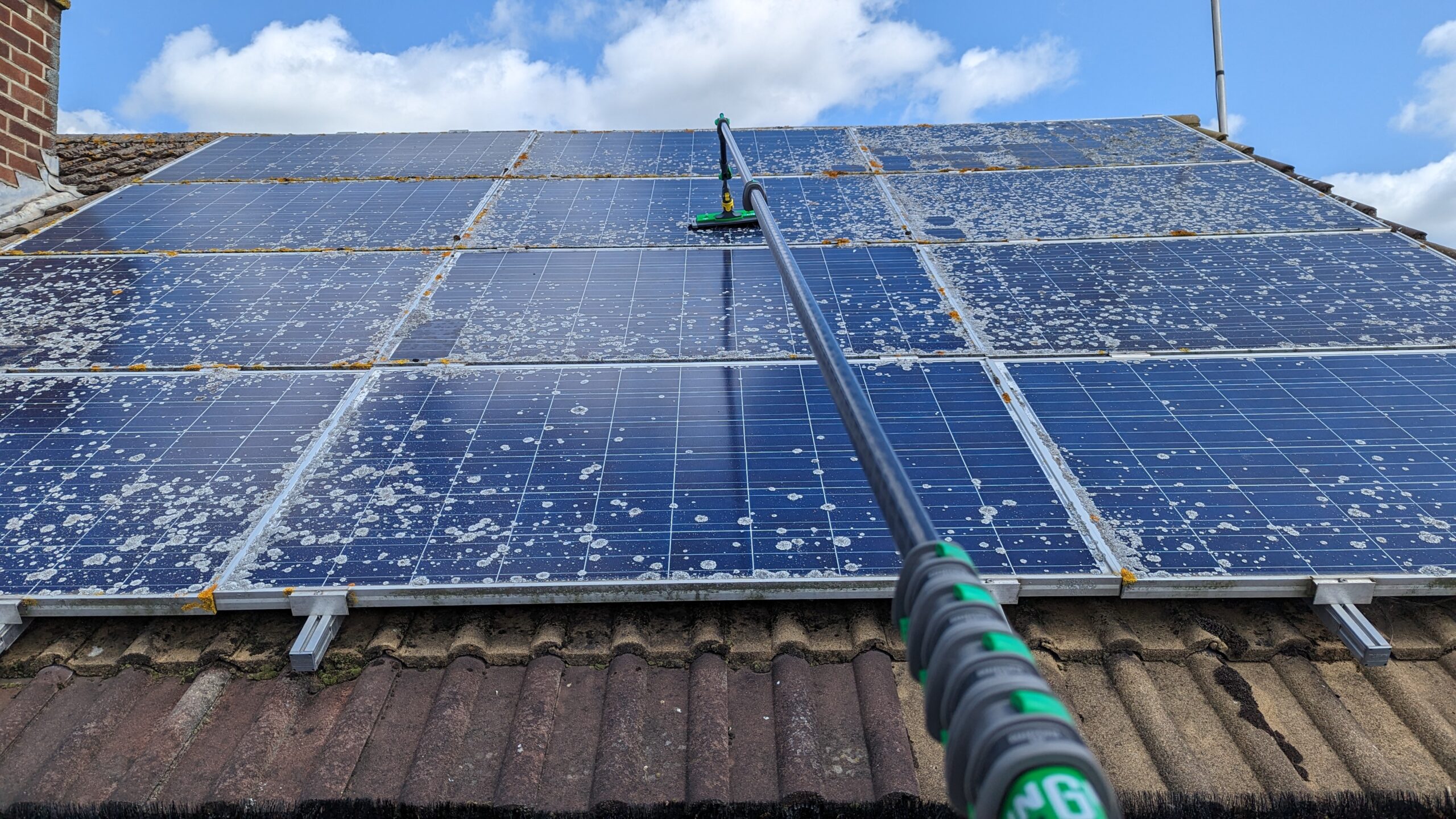
Some of our customers have reported noticeable improvements after heavily contaminated panels were cleaned. Reported increases have included around 30%, and in one case 50%.
These are customer observations, not independently controlled measurements. Weather, season, system condition and the original level of contamination all affect the result. We cannot guarantee a particular improvement in generation.
Real work · Real photographs
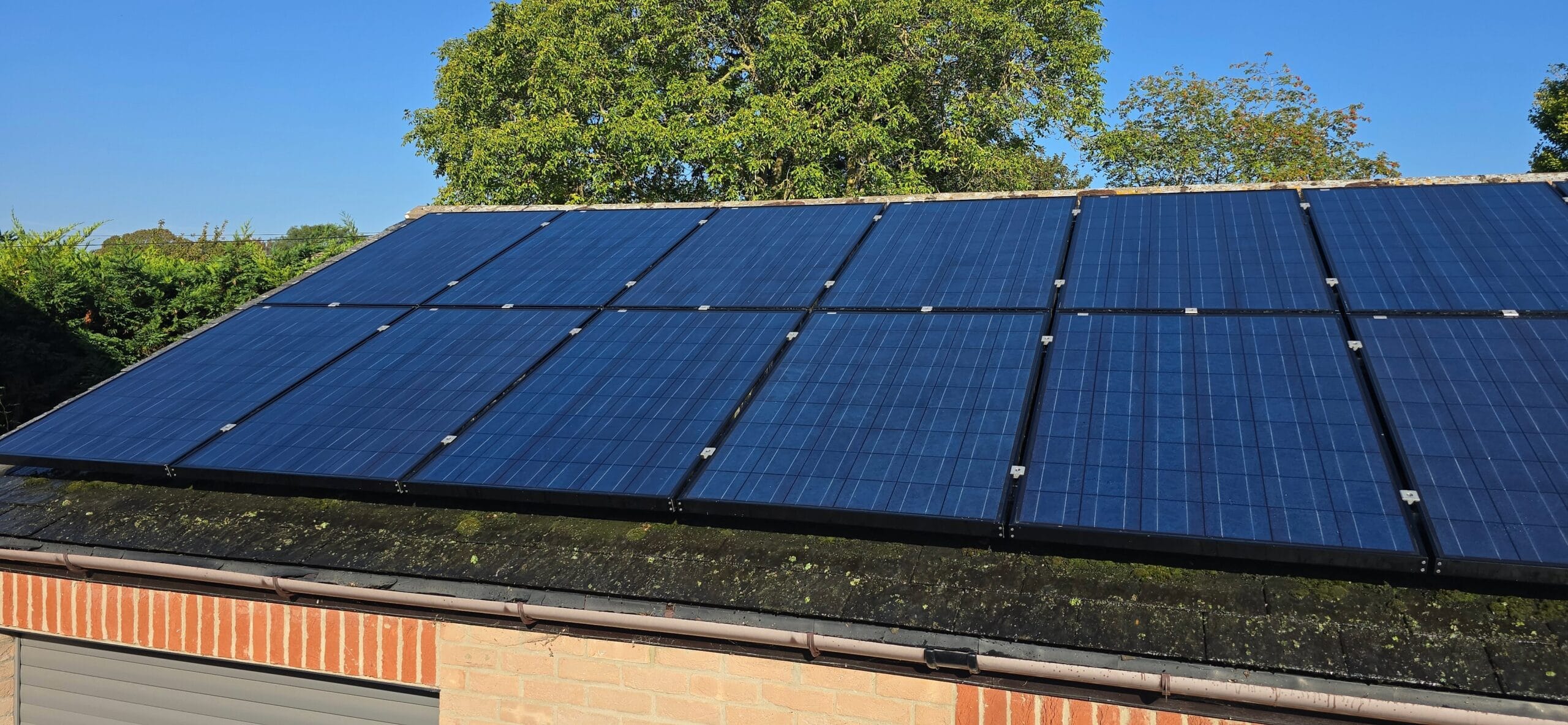
These photographs show the same rooftop installation before and after cleaning. Move the slider to reveal the difference.
When cleaning is overlooked
Some of the worst installations we encounter haven't been professionally cleaned since they were fitted.
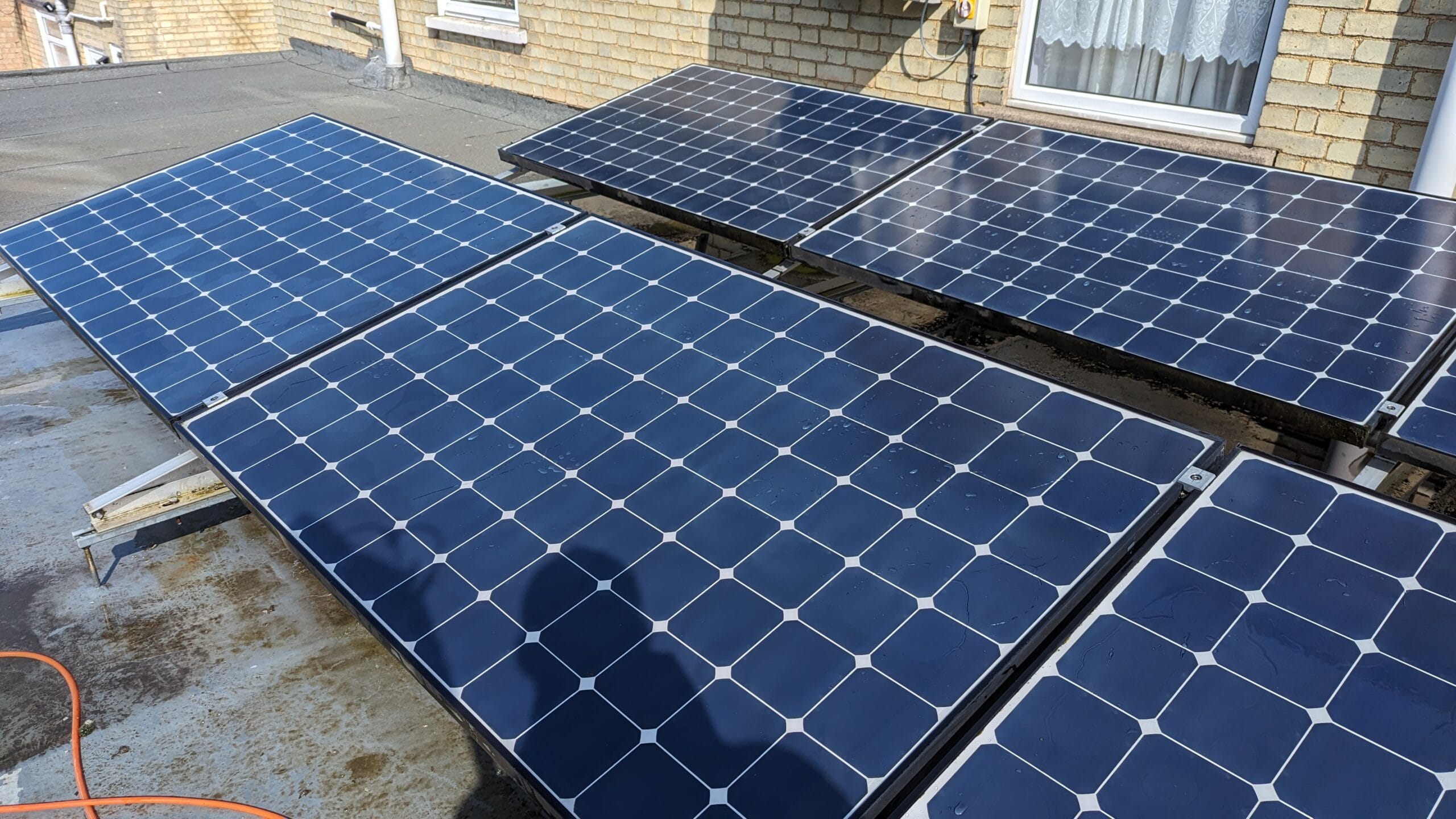
We've worked on panels that have been in place for more than 15 years. In severe cases, what began as scattered spots has developed into extensive coverage across multiple modules.
At that stage, a routine maintenance clean may no longer be sufficient. Removing established contamination can take considerably more work.
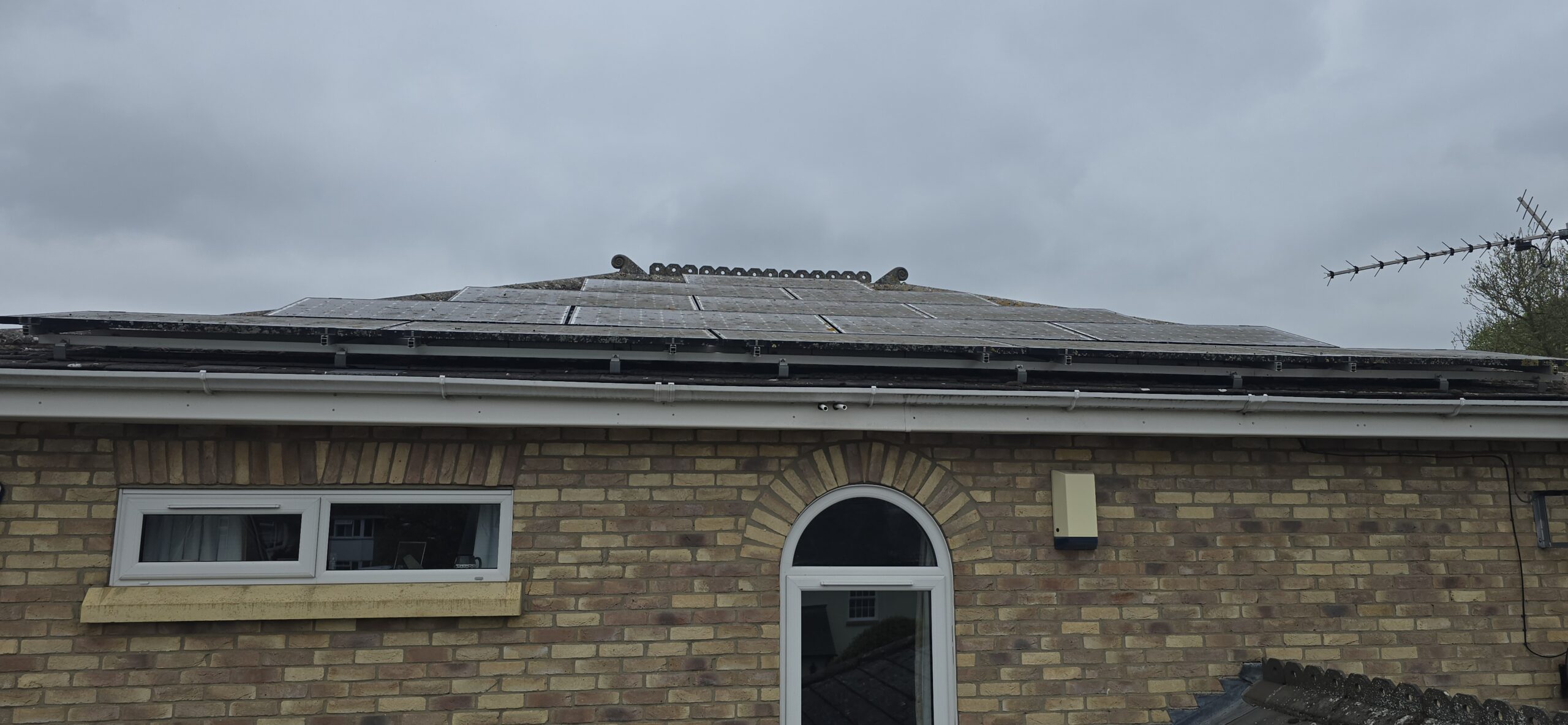
Regularly checking your panels for developing patches can help you avoid leaving a small problem to become a more involved restoration job.
A common misconception
Rain can help wash away some loose dust and surface dirt. But established lichen is a different matter.
Lichen can remain attached to the glass through repeated rainfall. Once it becomes established, ordinary rainwater is unlikely to remove it completely.
That's why some installations develop increasingly obvious patches even though they're exposed to regular British weather.
If white or grey spots remain visible after heavy rain, it's worth having them assessed.
Another real restoration
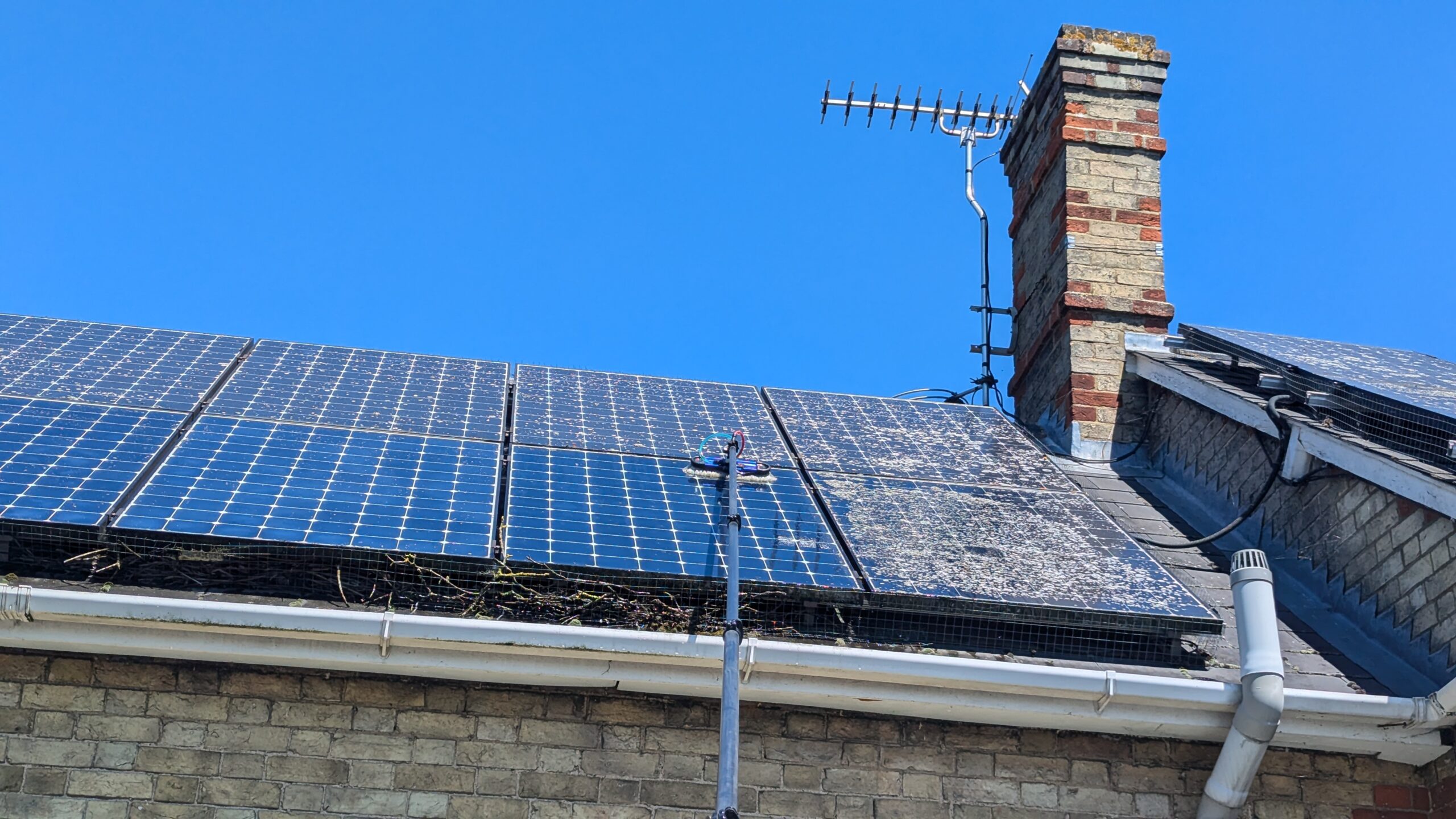
Here's another example from our solar cleaning work. Use the slider to compare the original contamination with the cleaned panels.
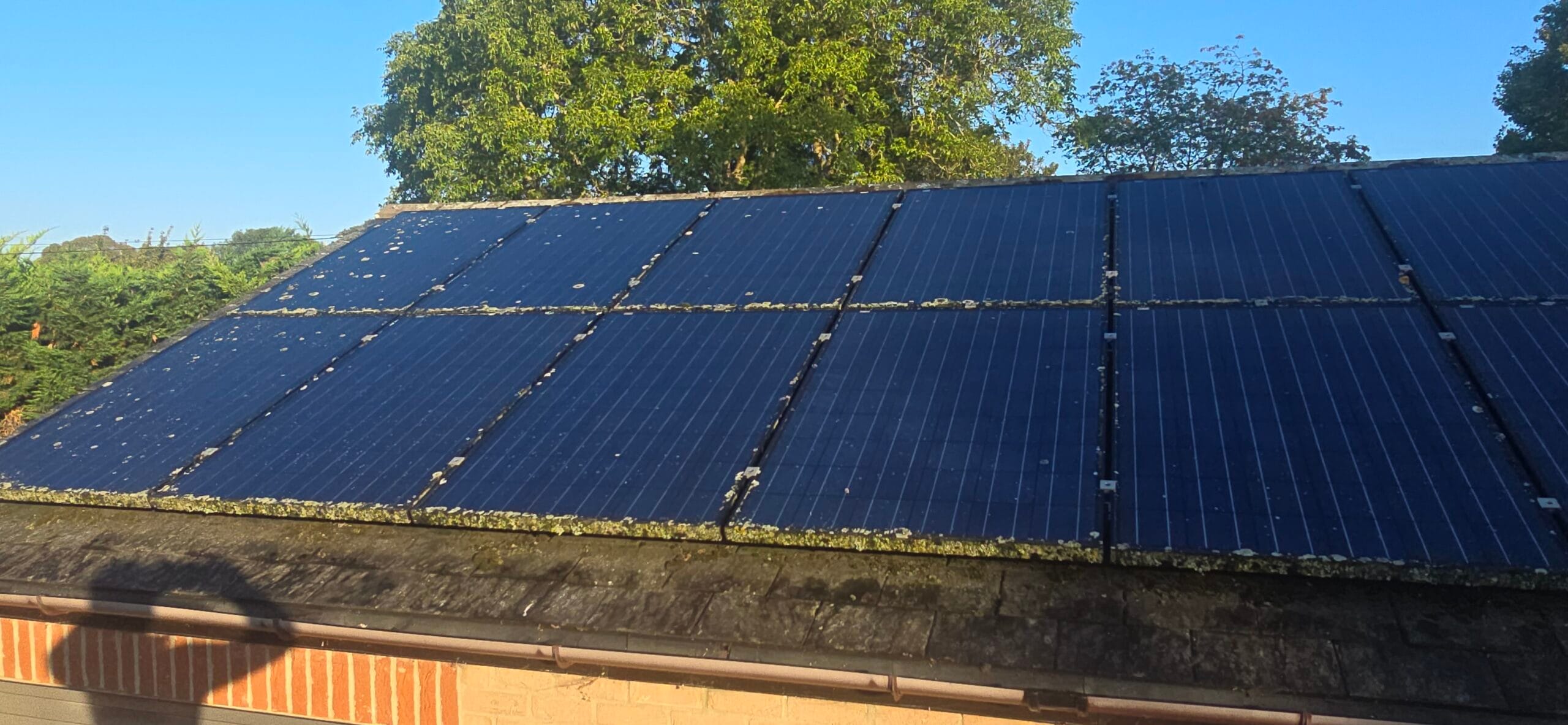
Specialist solar panel restoration
Routine solar panel cleaning and removing years of established lichen aren't necessarily the same job.
We consider the condition of the panels, the extent of contamination and the access required before recommending a service.
For established lichen, our Solar Restore service uses specialist cleaning methods and PureSeal SolarClean Pro, subject to suitability.
Once the panels have been restored, we can discuss a sensible maintenance approach to help prevent another prolonged build-up.
Specialist chemical treatment may not be permitted under every solar panel manufacturer's cleaning instructions and could affect warranty claims.
We explain this before recommending Solar Restore. Some older installations may still have an active performance warranty even where the original product warranty has expired.
Our approach draws on practical solar cleaning experience and professional biocide applicator training.
We don't recommend experimenting with household chemicals, abrasive tools or improvised roof access. Product suitability, safety and environmental precautions all matter.
Especially relevant to older installations
If your panels were installed 10 or 15 years ago, they may still be providing valuable electricity — and potentially generating tariff income.
Many older UK installations were registered under the historic Feed-in Tariff scheme. Eligible systems receive payments under their individual arrangements.
If contamination reduces electricity generation, it can affect both the electricity available for use and any generation-related payments.
Cleaning won't reverse age-related deterioration or repair faulty equipment, but removing significant contamination can help restore the amount of sunlight reaching the cells.
Looking after your investment
Not every installation needs the same cleaning treatment or maintenance interval. We offer different services depending on the condition of the panels.
Routine maintenance cleaning for dust, pollen, bird droppings and general surface contamination. Established lichen removal is not included.
Specialist treatment for established lichen and more demanding biological contamination, where suitable for the installation.
Solar Restore with an additional protective cleaning finish to help reduce future dirt adhesion.
Good to know
Lichen can block sunlight and create localised shading. Under certain circumstances, uneven shading can contribute to hot-spot heating. This doesn't mean every patch causes physical damage, but extensive contamination is worth addressing.
Removing contamination allows more light to reach the solar cells and may improve output. The amount depends on the original contamination, weather, shading and the condition of the system. We don't guarantee a particular percentage improvement.
Rain may remove loose dust and dirt, but established lichen generally remains attached to the surface. Specialist attention may be needed.
We don't recommend climbing onto roofs or experimenting with chemicals, abrasive tools or pressure washing. Solar panels require appropriate access, equipment and cleaning methods.
It may. Manufacturers have different cleaning requirements and some restrict chemical treatments. We explain relevant warranty considerations before recommending specialist lichen removal.
There's no single interval suitable for every installation. Panel angle, nearby trees, birds and local conditions all affect how quickly contamination develops. We can recommend an appropriate approach for your property.
The price depends on the number of panels, their condition and the access required. Our solar cleaning page explains our service options and current guide prices. You can also request a quote for your installation.
Yes. Clean It Cambridge is based in Comberton and covers Cambridge and surrounding areas. Send us your address, panel count and photographs to help us assess the work.
Whether you've noticed a few stubborn patches or your panels haven't been cleaned for years, we'd be happy to assess them.
Send us your panel count, property details and a few photographs to get started.
Further reading
Our advice combines first-hand cleaning experience with published research into photovoltaic soiling, shading and system performance.
Performance improvements mentioned in this article are customer-reported observations, not guaranteed outcomes. Photographs show real cleaning work; results vary by installation.