

Light surface dust
Minor, temporary dust may disappear naturally with rainfall. A clean-looking, normally performing system may not need immediate attention.
Some solar panels stay reasonably clean with rainfall. Others develop deposits that rain simply won't remove. So how do you know when cleaning is worthwhile?
Explore real photographs from our cleaning work, identify what's on your panels and discover which Clean It Cambridge service may be appropriate.
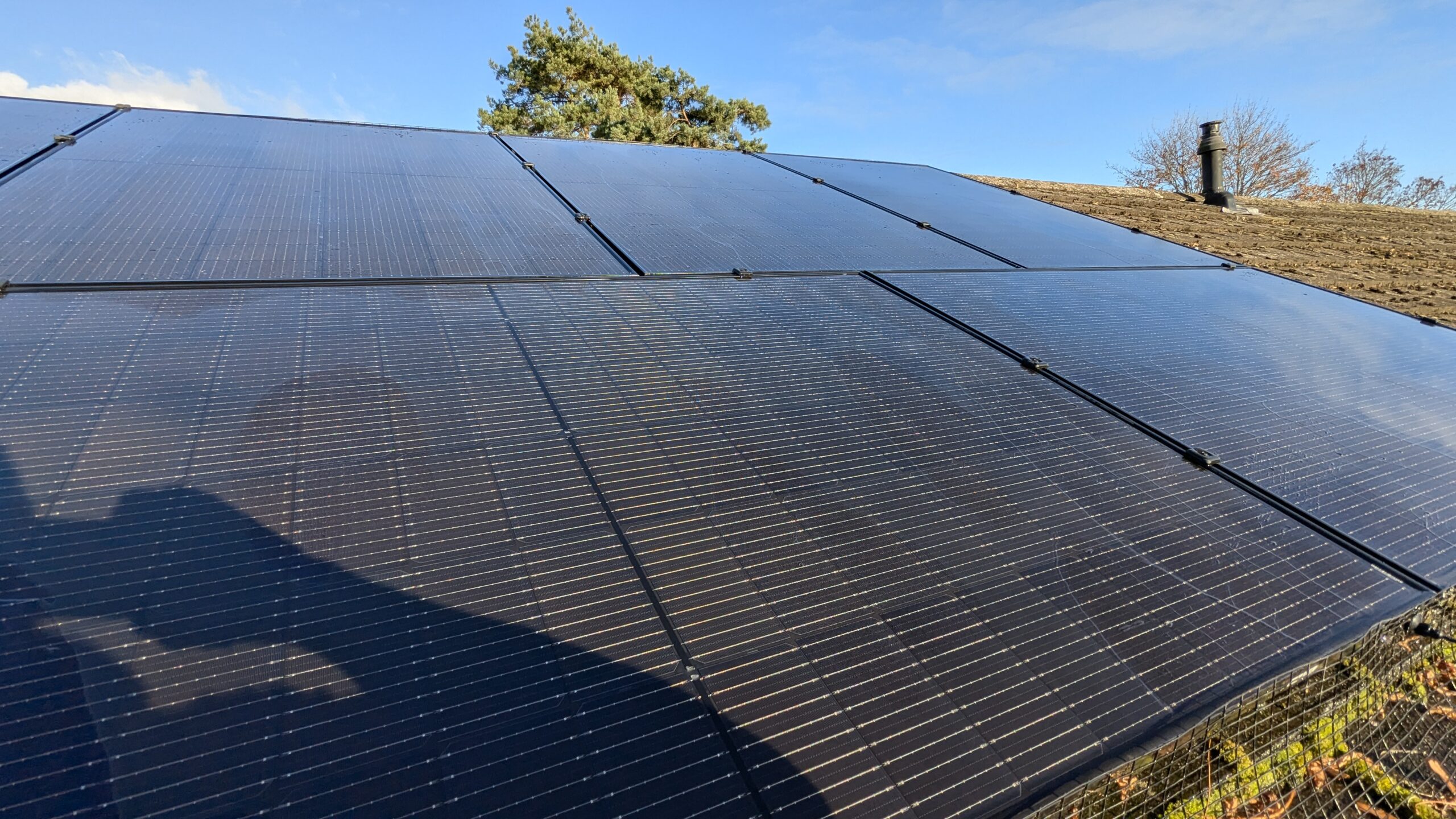 Real solar panel cleaning work by Clean It Cambridge
Solar panels are designed to work outdoors. On a suitably pitched roof, rain can help remove loose dust. However, some contamination remains attached to the glass or collects around the frames.
Minor, temporary dust may disappear naturally with rainfall. A clean-looking, normally performing system may not need immediate attention.
Bird droppings, pollen and general grime can remain on the glass, particularly when deposits are concentrated or repeatedly build up.
Lichen and other firmly attached biological growth may need specialist treatment rather than a straightforward maintenance clean.
Compare your panels with these photographs from our cleaning work. We've zoomed into the affected areas to help you recognise the deposits. Select all the conditions that apply.
Recommendations are provisional. The correct treatment depends on the contamination, panel condition, access and manufacturer guidance. This checker cannot diagnose electrical faults.
These are photographs from actual Clean It Cambridge cleaning work. Drag each slider to compare the condition before and after cleaning.
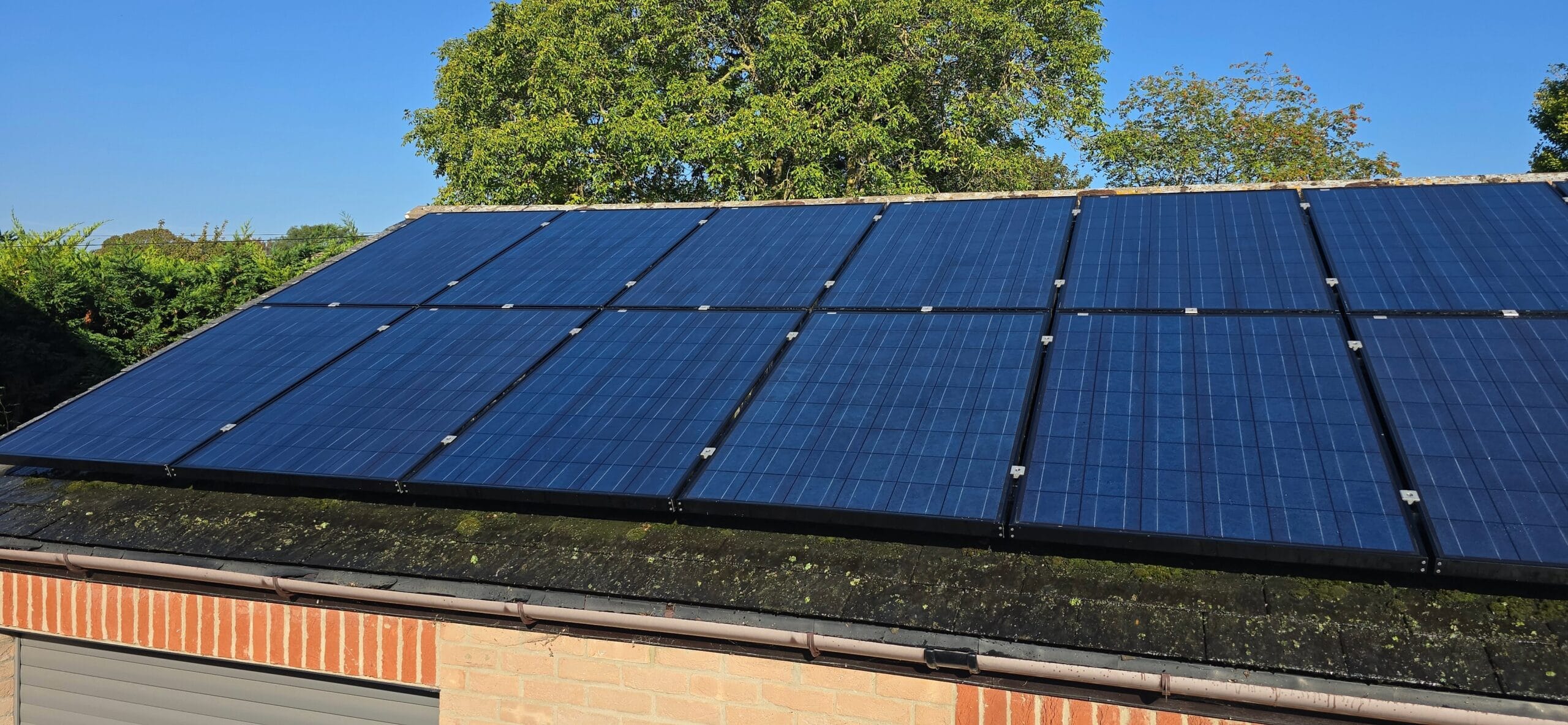
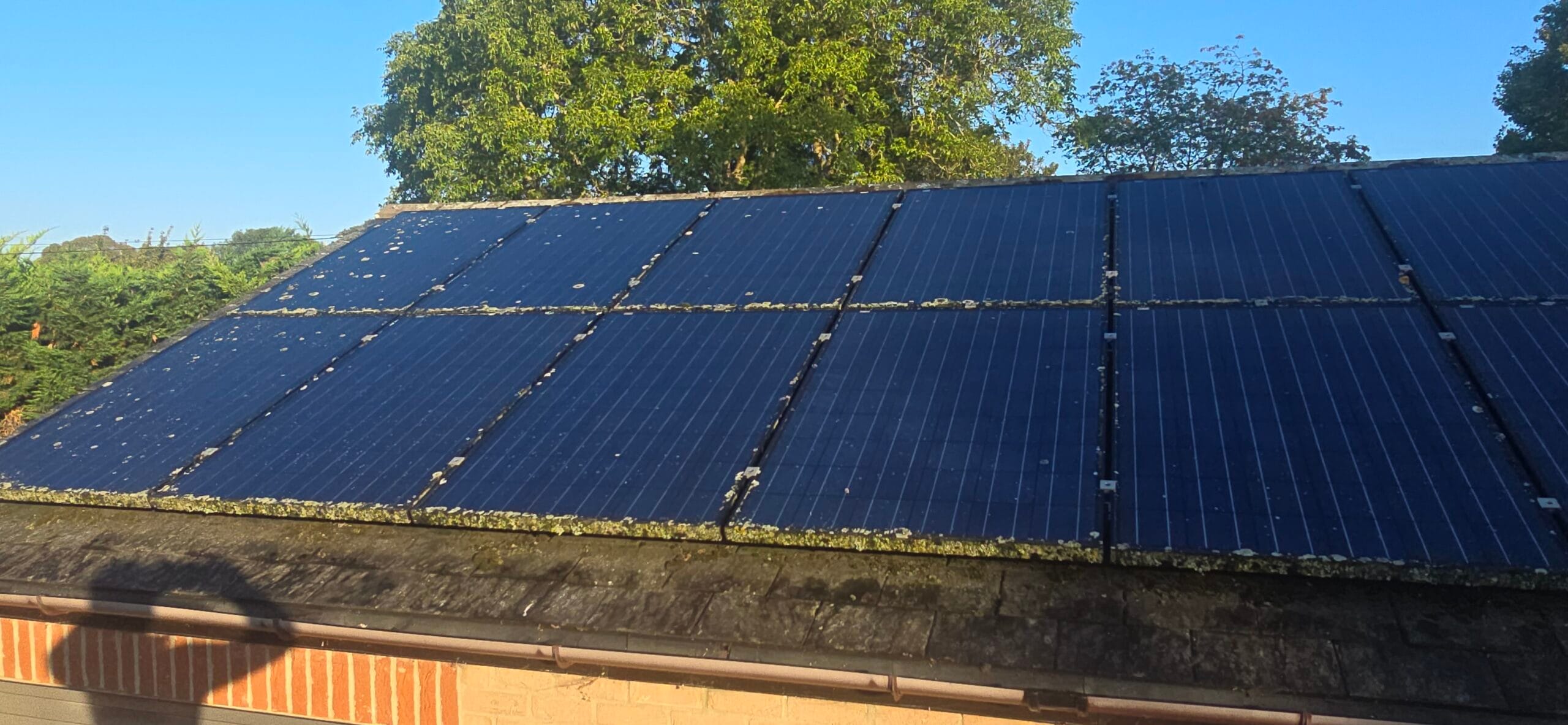 Before
After
Drag the slider or use your arrow keys.
Lichen can become firmly attached to the glass. Specialist removal may be needed to restore the surface.
Service: Solar Restore or Solar Restore & Protect.
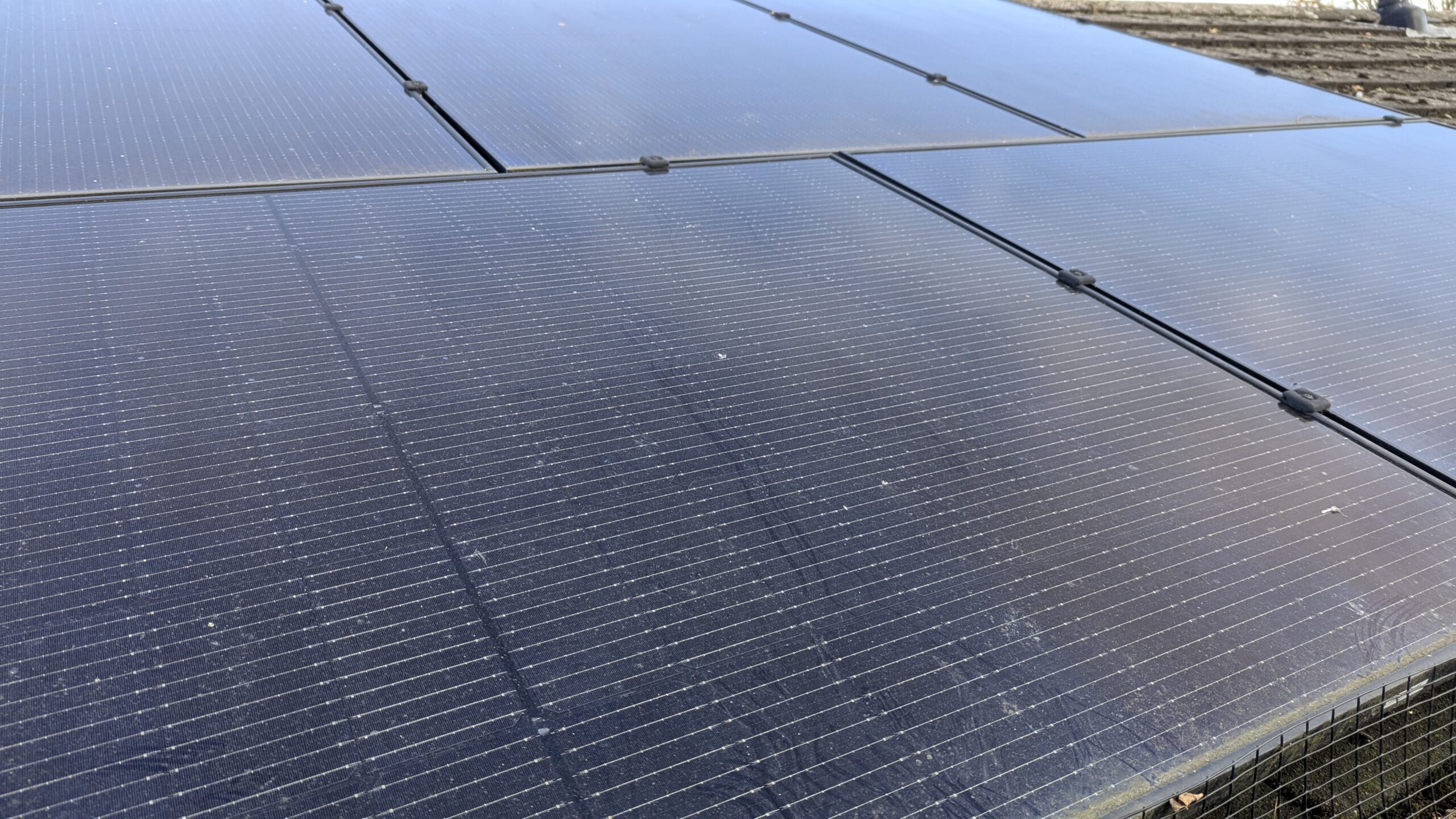 Before
After
Drag the slider or use your arrow keys.
A film of surface contamination can make the panels appear dull. Cleaning restores a clearer glass surface.
Service: Solar Care.
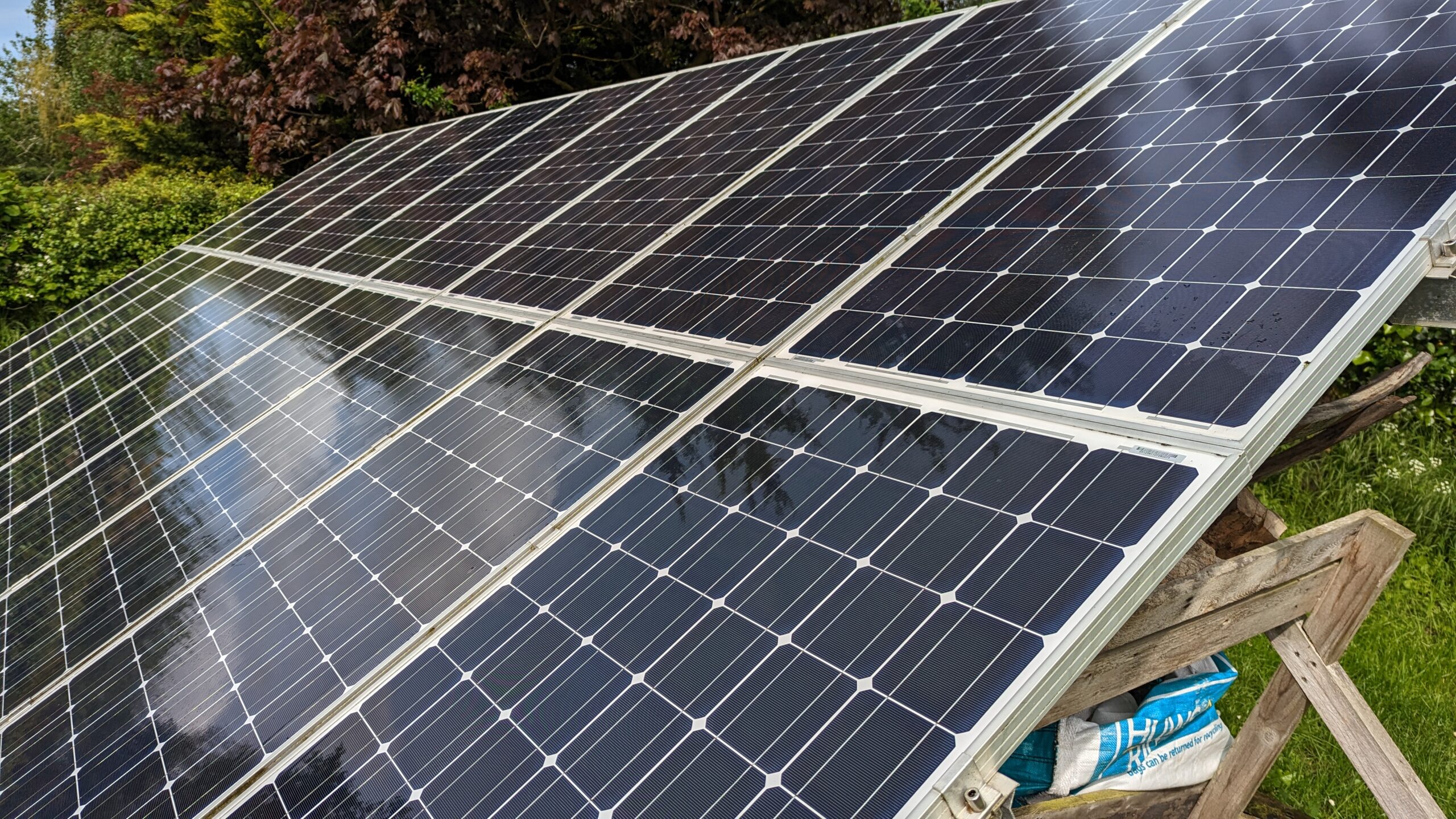
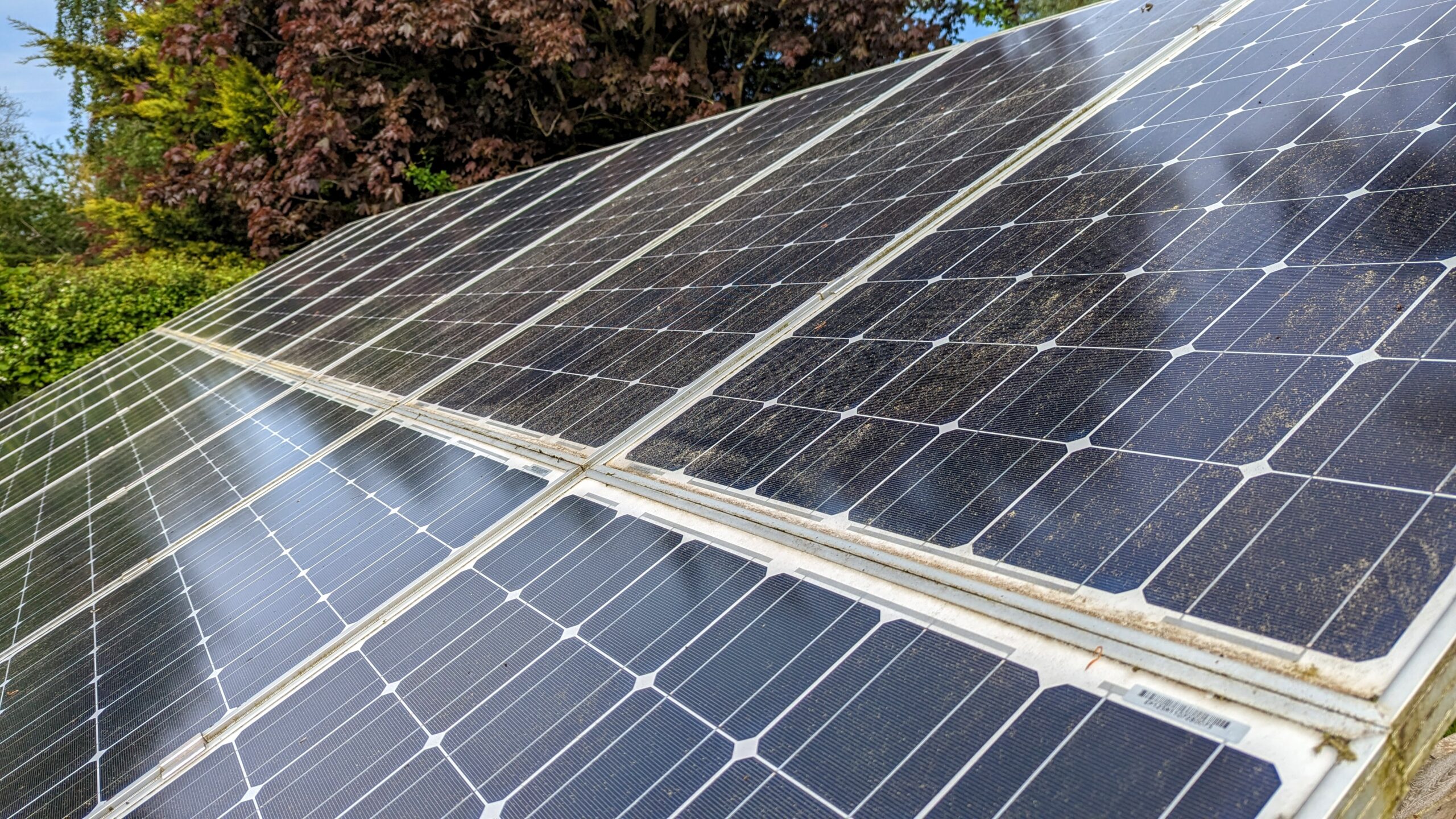 Before
After
Drag the slider or use your arrow keys.
Seasonal airborne deposits can accumulate across the surface and around panel edges.
Service: Solar Care.
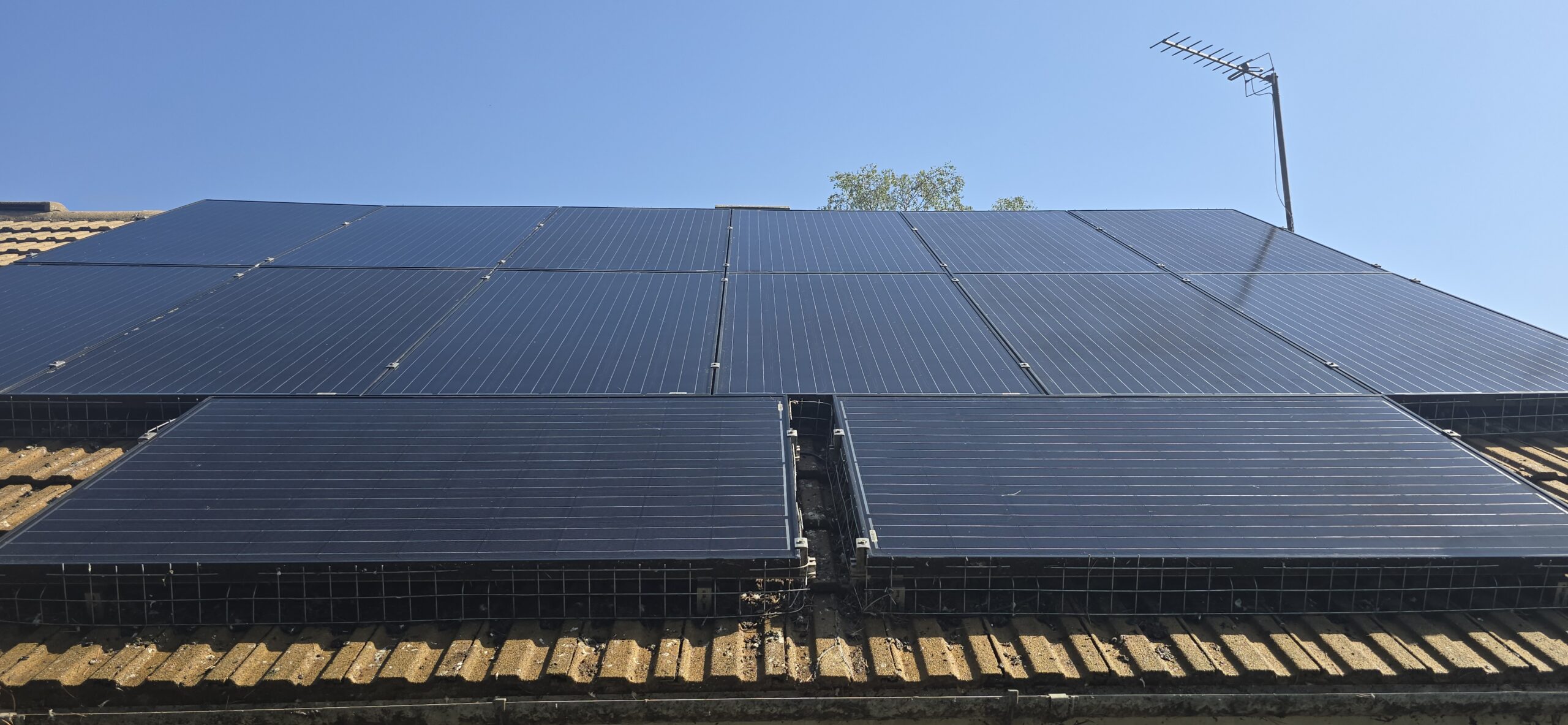
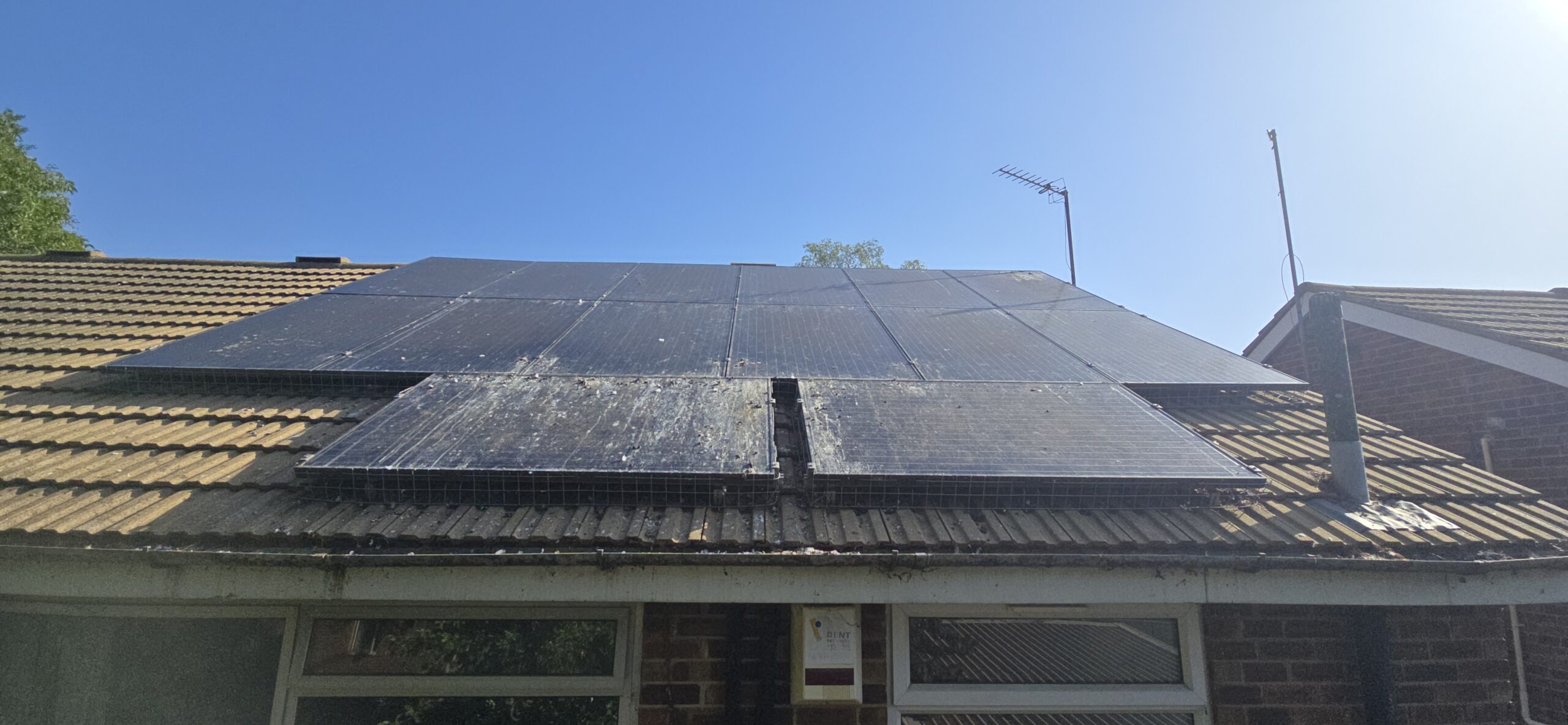 Before
After
Drag the slider or use your arrow keys.
Concentrated deposits can obscure parts of individual panels and may remain after rain.
Service: Solar Care.
These comparisons show visible cleaning results, not measured electricity-generation improvements. The before-and-after photographs should represent matching views for an accurate slider comparison.
“I also promised to report back on whether the cleaning had made a difference. I can say that I have reached near maximum output in recent days, and that I started noticing an improvement as soon as the panels were cleaned. Thank you so much.”
Customer-reported experience. Generation was not independently measured as part of this cleaning work.
Yes. Solar panels rely on light reaching their cells. Deposits on the glass can reduce the amount of light passing through, although the impact varies considerably.
A thin, even layer of dust is different from concentrated bird droppings or established biological growth. The location and extent of contamination matter, as do the design and operating conditions of the system.
Cleaning can remove a physical obstruction to sunlight. However, it cannot correct shading from trees, inverter problems, electrical faults or normal seasonal changes in daylight.
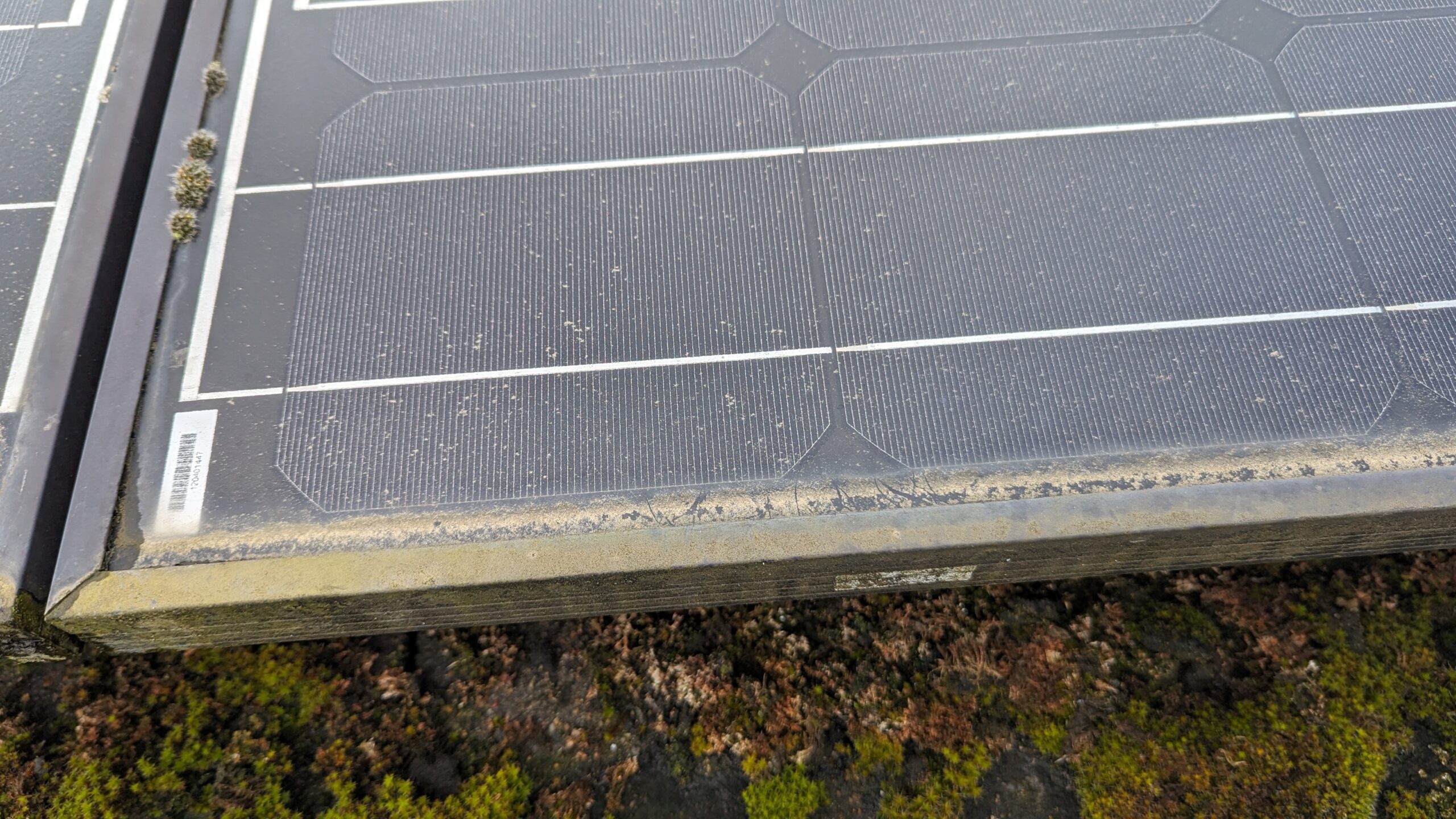
Dirt and moss-like growth collecting around a solar panel frame.
If your solar panels were installed some years ago, you may still receive payments under the Feed-in Tariff (FIT). This is another reason why maintaining the condition of an existing solar installation can be worthwhile.
The UK Feed-in Tariff scheme closed to new applicants in March 2019, subject to limited transitional arrangements. Eligible installations already accredited under the scheme can continue receiving payments for their applicable support period, provided they remain eligible.
FIT arrangements can include a generation tariff, based on eligible electricity generated, and an export tariff for electricity exported to the grid.
Some installations have export measured by a meter. Others use deemed export, where export is calculated using an assumed proportion of generation rather than measured exported electricity.
Cleaning is not a condition that automatically guarantees FIT payments, and we wouldn't suggest that every FIT installation needs annual cleaning.
However, where contamination is significantly obstructing sunlight, removing it may help the panels generate electricity more effectively. The financial effect, if any, depends on the installation and its actual performance.
Your generation tariff, export arrangement, accreditation and support period are specific to your installation.
If you're unsure whether you're still receiving FIT payments, check your statements or contact your FIT licensee. A solar panel cleaner cannot determine your tariff eligibility from the condition of the panels.
Further information: Ofgem — Feed-in Tariffs . This article does not estimate FIT earnings, cleaning-related savings or financial returns.
We offer different cleaning options depending on whether the panels need routine maintenance or specialist restoration.
For general dirt and everyday contamination.
For established lichen and more stubborn contamination that needs a specialist approach.
Specialist restoration with an additional protective treatment.
Service suitability is confirmed after considering the panel condition, access and manufacturer guidance. Extensive moss-like growth may need assessment before selecting a package.
For routine Solar Care, we use purified water alongside Chemitek Solar Wash Protect (SWP), a specialist product intended to assist cleaning and help reduce dirt adhesion on treated surfaces.
In our work, we find it makes cleaning easier. We also observe water forming droplets and beading on the glass after application.
This visible effect doesn't establish how long the treatment lasts or prove a particular electricity-generation improvement.
We can explain the cleaning work undertaken, provide before-and-after photographs and record relevant visible observations.
We do not promise a fixed percentage increase in electricity generation, guaranteed protection duration or universal compatibility with every panel manufacturer.
We also do not carry out electrical testing as part of a standard solar panel clean.
There isn't a single cleaning interval that's appropriate for every installation. The best approach depends on local conditions, visible contamination and any written maintenance requirements.
Monitor their condition visually from a safe position and keep an eye on generation data. A paid clean may not be necessary simply because another year has passed.
Nearby trees, birds and local environmental conditions can lead to faster build-up. More regular inspection or planned cleaning may be worthwhile.
Some Cambridge-area homeowners have told us their housebuilder recommended annual cleaning to maintain warranty cover. However, requirements vary, and this should not be assumed to apply to every installation.
Check your housebuilder's handover information, installer's warranty and module manufacturer's cleaning instructions. If annual cleaning is described as compulsory, ask for the relevant written clause.
Following cleaning, we provide a report recording the work carried out, visible observations and before-and-after photographs. This can form part of your maintenance records, but it is not an electrical inspection or warranty certification.
Only consider methods permitted by the panel manufacturer and that can be carried out safely. Never climb onto a roof or use pressure washing, abrasive tools or unsuitable chemicals. Professional help is sensible where access or contamination creates additional risks.
No. They are different types of biological growth. They may appear on the same installation, but identifying them accurately from the ground can be difficult.
No. Removing contamination can help where soiling was obstructing sunlight, but the result depends on the installation. Cleaning cannot fix electrical faults, inverter problems or shading.
Dirty panels do not automatically cause you to lose FIT accreditation. However, if contamination reduces generation, it may affect generation-linked payments. Your eligibility and payment arrangements depend on your own FIT terms.
Check monitoring data, seasonal conditions, shading and inverter messages. If you suspect a fault, contact your installer or a qualified solar PV technician before assuming that cleaning will solve the problem.
Yes. Our cleaning report records the work carried out, relevant visible observations and before-and-after photographs. It is not a technical performance assessment.
Send us photographs taken safely from the ground. We'll help you decide whether Solar Care, Solar Restore, Solar Restore & Protect or no immediate cleaning is the sensible next step.
Request a solar panel cleaning quote