
Clean It Cambridge · Window cleaning advice
How to clean the inside of your windows without streaks
We’ve just cleaned the outside, and now you can see how grubby the insides are. The fingerprints and smears that were easy to miss suddenly stand out.
Here’s the kit we’d buy for doing it yourself, how to use it, and what to do if your first few passes leave lines.
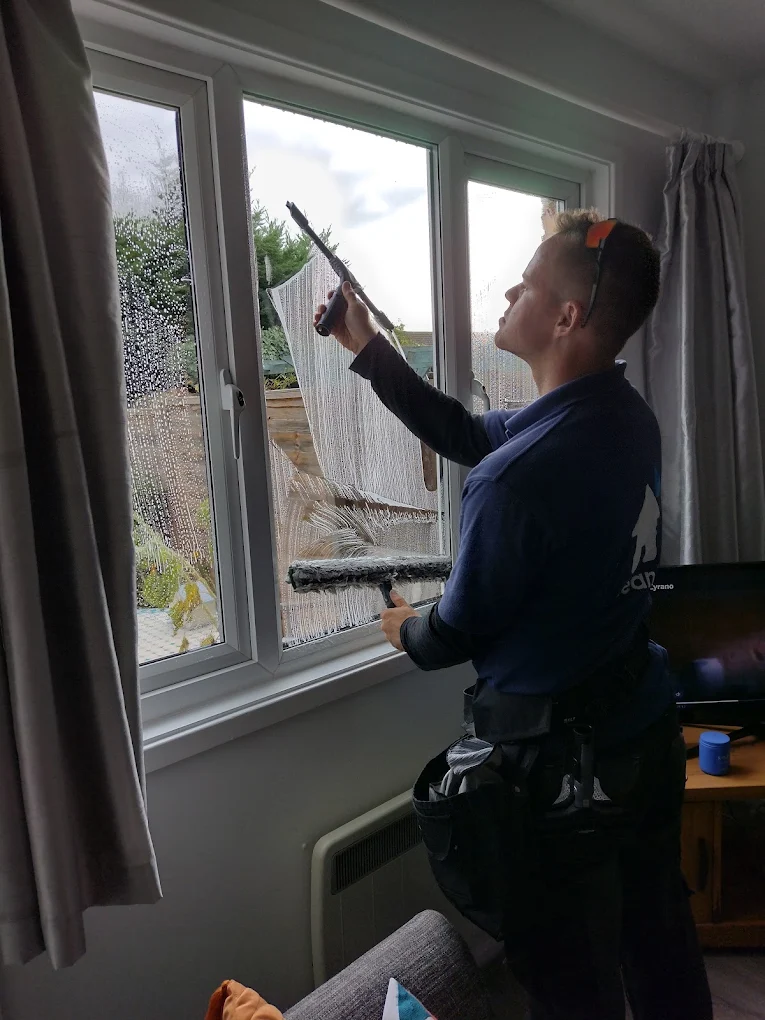
Equipment recommendations
We often hear from people who can’t get their inside windows clean without leaving streaks. If you’ve gone over the same pane twice and it still looks smeary, take a look at the tools you’re using. A worn or uneven rubber blade can leave a line on every pull, and a cloth that’s already damp can drag water back across the glass.
A good applicator loosens fingerprints and dirt, a smooth rubber blade pulls the dirty water off in one pass, and an absorbent glass cloth picks up the drops around the edges. Here are the two products we’d start with.
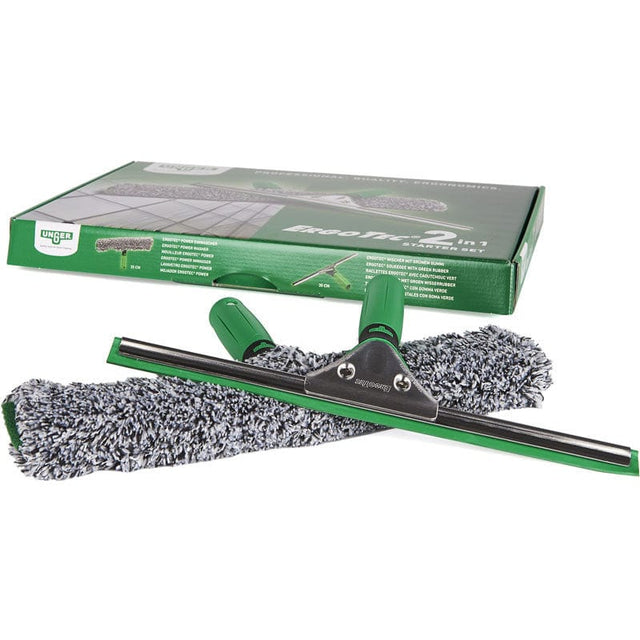
Unger ErgoTec 2-in-1 Starter Set
This is our top pick for an entry-level, professional-quality setup. Use the applicator side to spread a thin layer of soapy water and loosen fingerprints, then turn to the rubber blade to draw that water off the glass. The rubber edge is the part that gives you a clean finish when you pull it smoothly and keep it free of grit.
How to use it indoors: Give the glass a quick spritz with your spray bottle, then scrub it with the applicator. Try a few straight pulls on a pane you can reach comfortably. If you’re choosing a size, check it fits inside your narrowest panes with room to manoeuvre.
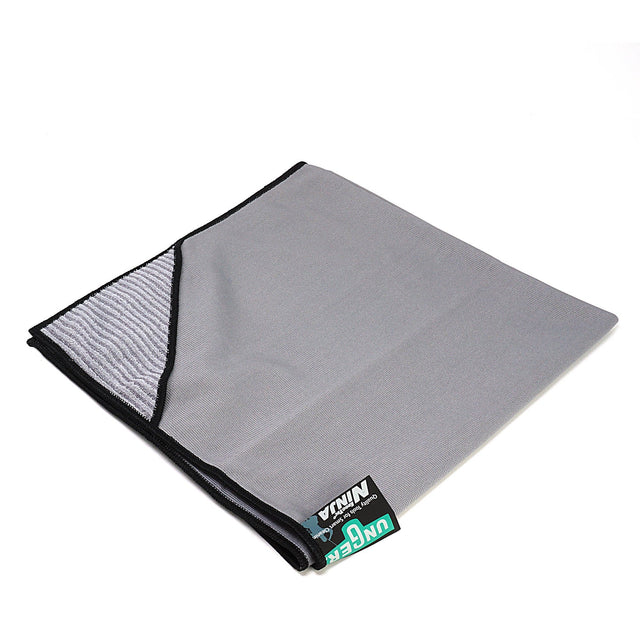
Unger ErgoTec Ninja MicroWipe
We’d buy a good glass cloth alongside the starter set. The MicroWipe’s absorbent weave picks up the thin line of water along the frame and the drops that collect in the corners. That’s where a freshly cleaned window can start to look streaky again if the water is left to run.
How to use it indoors: Fold the cloth into quarters and turn to a fresh, dry face when one gets damp. Use a separate everyday microfibre for the sill and frame so you keep the glass cloth clean.
Before you wet the glass
Set up for a clean, dry sill
Clear the sill, move curtains or blinds aside, and lay down an old towel. Wipe loose dust off the top and sides of the frame first. That way, a drip from the frame is less likely to carry dirt down the pane you’ve just cleaned.
Fill a clean spray bottle with water and add a small squirt of washing-up liquid. Keep a general-purpose cloth handy for the frame and sill, and a clean, dry glass cloth for the final detail. Work on one pane at a time so the solution stays wet while you squeegee it off.
Five steps to clean inside windows
Start with a small, easy-to-reach pane. Straight downward pulls make it easier to see where you’ve been and where to place the blade next. Choose a step to see its photo and instructions.
1. Spritz and scrub the glass
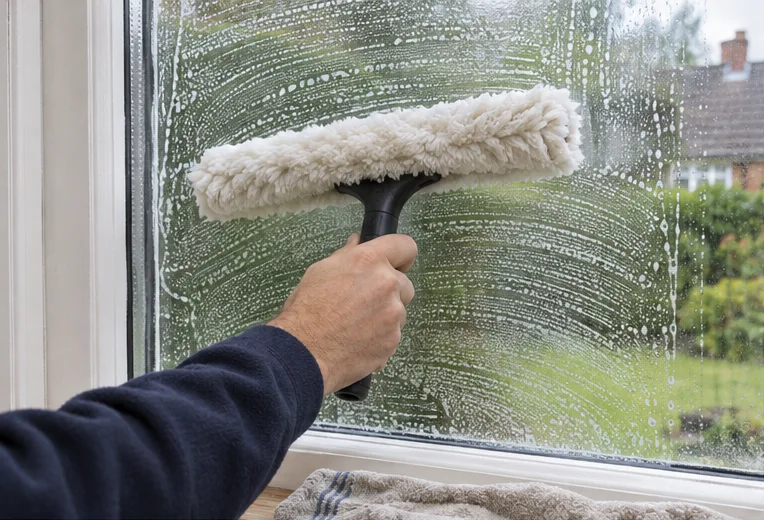
Give the glass a quick spritz with the spray bottle, then scrub the pane with the applicator. Spend a little extra time on fingerprints and greasy marks. A light mist is enough to wet the glass without soaking the sill.
If a fingerprint is stubborn, go over that spot again with the damp applicator while the pane is still wet.
2. Pull straight down
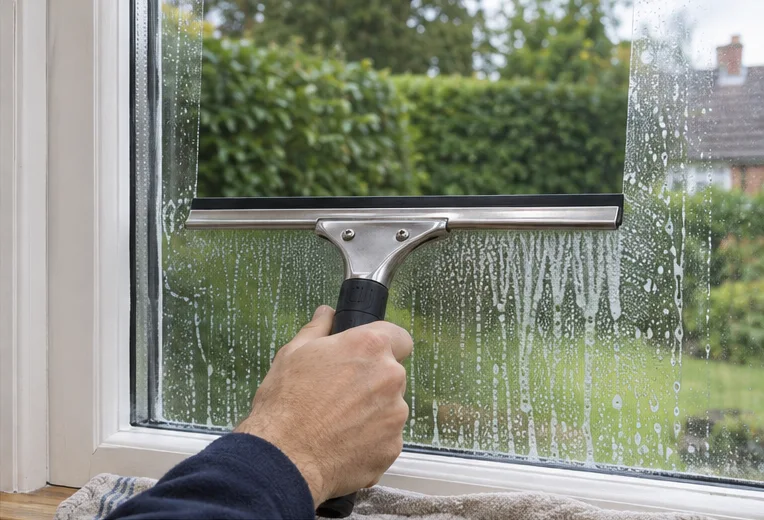
Start at the top near one side. Hold the blade level and pull straight down with light, even pressure.
Make a short practice pull on an easy pane to get a feel for the pressure. Keep the rubber flat against the glass throughout the pull.
3. Wipe the rubber between pulls
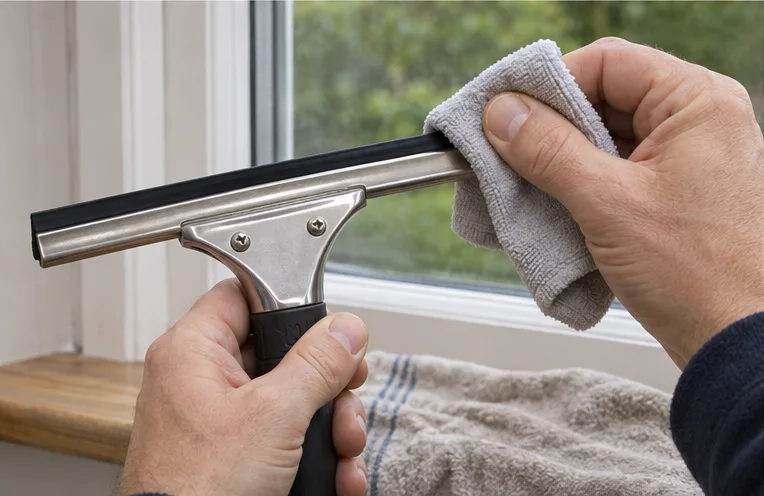
Wipe the blade with a clean cloth between passes. Repeat across the pane, overlapping each pull slightly and bringing the final pass close to the frame.
Use a separate clean cloth for the blade if you have one. Before starting the next pull, check that no lint or grit is stuck to the rubber.
4. Overlap the previous pull
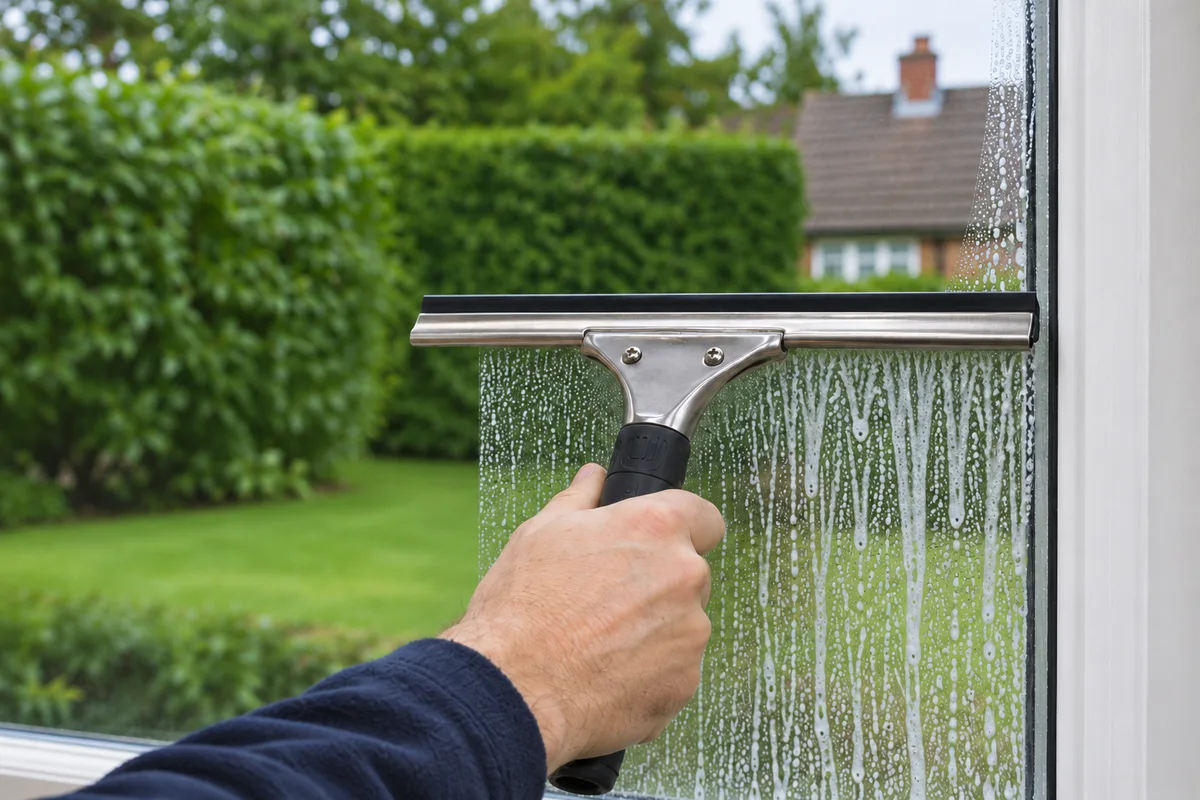
Let one end of the blade run just inside the strip you’ve already cleared. The slight overlap picks up the line of water between passes. On the last pull, bring the other end close to the frame.
If you see a seam, re-wet that part of the glass and make an overlapping pull again. This is easier than trying to polish away a long dried line.
5. Dry the edges and sill
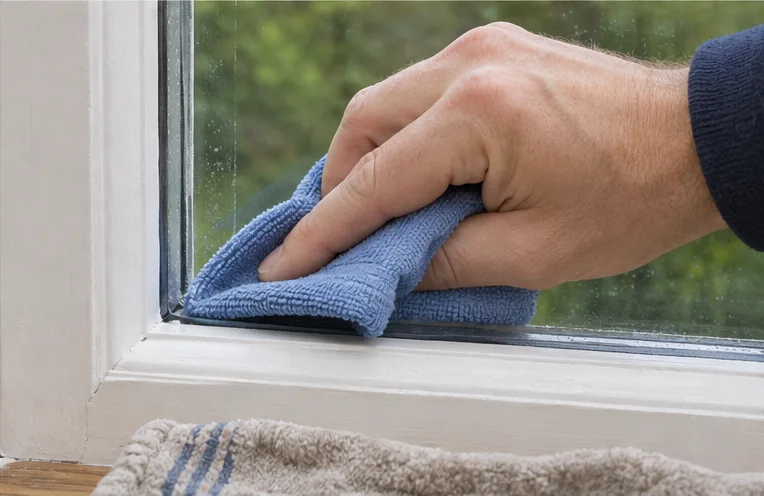
Use the clean glass microfibre to pick up water where the glass meets the frame, especially in the bottom corners. Fold the cloth so you can turn to a dry face as you go. Use your separate cloth for the sill.
Use a dry fold of the cloth for the last corner. Keep the cloth on the edge so it doesn’t drag water back across the clear glass.
Why are my inside windows still streaky?
Do I need a specialist window cleaning spray?
We often find ready-made glass sprays leave smears when they’re wiped across a whole pane. We get better results with a good squeegee, a light mix of washing-up liquid and water, and a bit of practice. Use just enough washing-up liquid to help the blade glide. For regular upkeep with the Vikan EasyShine, we dampen the pad with pure water alone.
A line comes back in the same place on every pull
Wipe the blade and check the edge for grit or a nick. If the rubber is damaged, replace it.
There’s a seam between two pulls
Re-wet that strip and overlap the previously cleared area a little more. Keep the pressure steady as you pull down.
The whole pane looks smeary
Mix a fresh solution with less washing-up liquid and use a fresh, dry section of the glass cloth. If the window is warm, clean one pane at a time so the water doesn’t dry before you remove it.
A mark hasn’t moved at all
Try this on one pane before washing it again. Look at the mark from an angle and wipe a small spot on the inside with a clean, lightly damp cloth. If the mark stays put, check the same spot from outside if it’s safely accessible. That quick test can save you another pass over the whole pane.
See it on a real job
Watch us clean inside a Cambridge restaurant
For shops, restaurants and other workplaces, see our commercial window cleaning service.
When a mop or window vac is useful
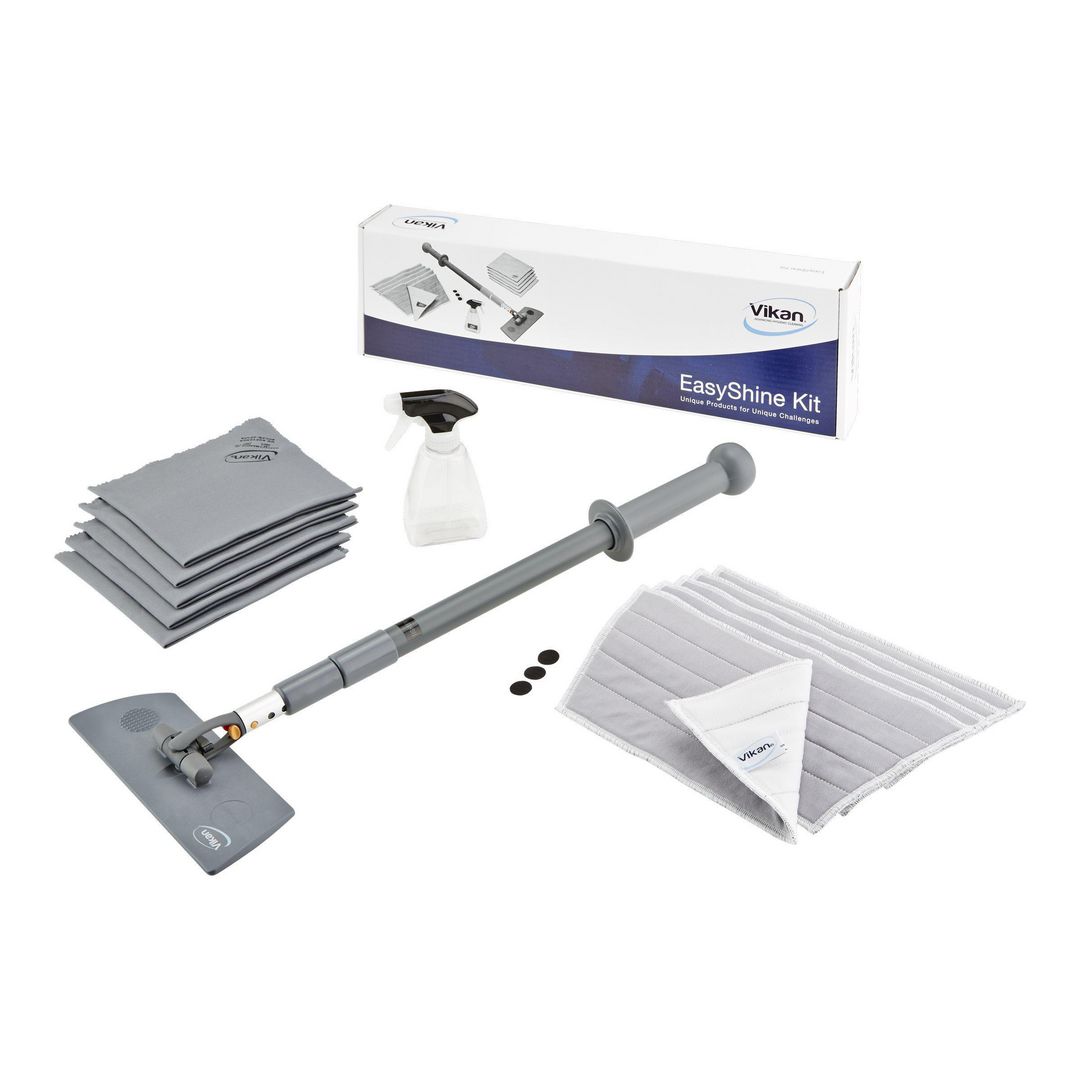
Vikan EasyShine for quick upkeep
If your windows are already fairly clean, lightly dampen a fresh pad and wipe away light marks as they appear. We use pure water in ours. There’s no need to add soap for this kind of regular upkeep. For a greasy build-up, start with the applicator and squeegee.

Kärcher Window Vac for catching drips
Useful on a skylight you can safely reach or above painted surfaces you want to keep dry. It collects the water as you go. On ordinary panes, we prefer the finish from a good rubber squeegee.
What we use on the job
Our kit works on the same principle as the starter set. We use Unger Ninja squeegees and applicators, plus a selection of good microfibre cloths so there’s always a clean, dry one for detailing the glass. Pouches keep the cloths to hand, and a bucket on a belt carries the wet tools between panes. We also carry scrapers for selected jobs where they’re suitable for the glass.
The tools that make the difference at home are the ones touching the window: an applicator that loosens the dirt, a smooth rubber blade that clears an even strip, and a dry cloth to finish the edges. Practise on one easy pane until you can clear it cleanly before tackling the bigger windows.

Do you need pure water for the insides?
Tap water is fine for the squeegee method because you pull it off and dry the edges. Cambridge tap water is hard, so pure water can help when you’re doing a light wipe and leaving a little moisture to dry.
If we’re already cleaning your outside windows and you’d like a little pure water for the insides, just ask. We’re happy to give you some free.
High and awkward glazing
When to call a professional
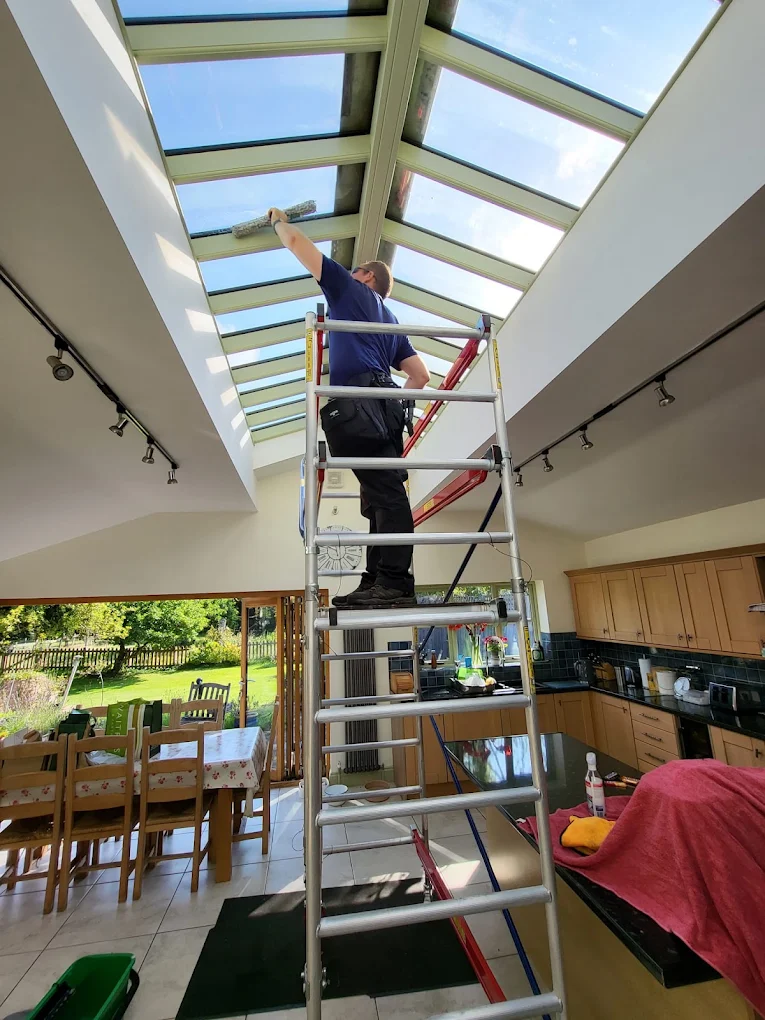
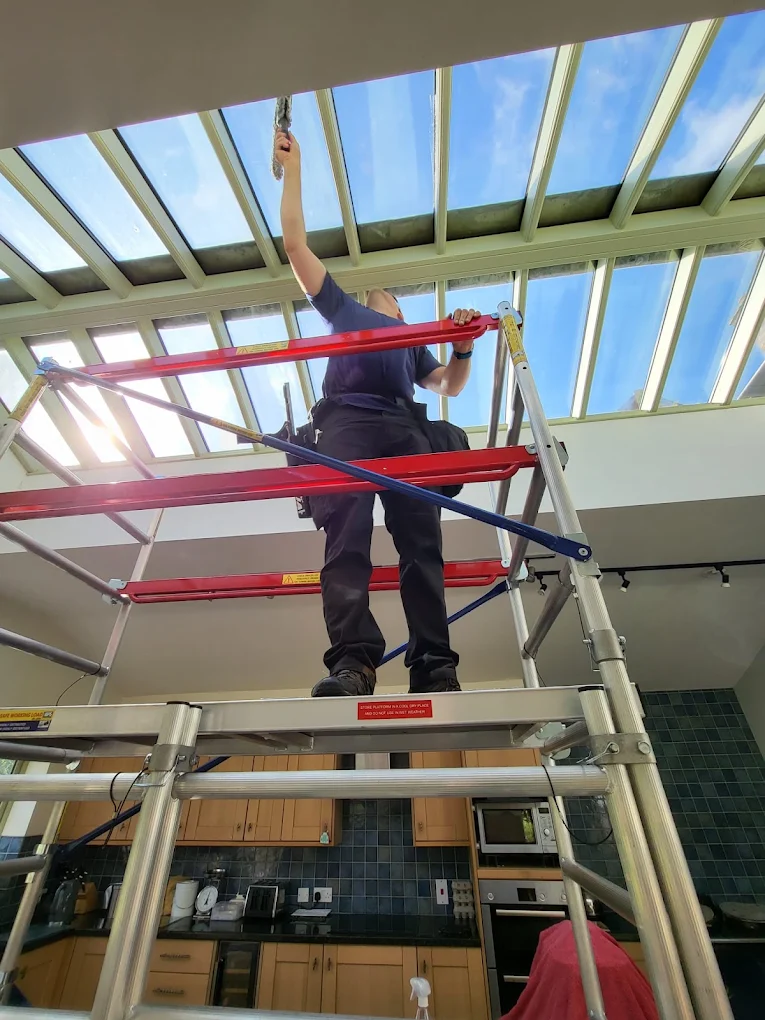
The five-step method is for glass you can reach comfortably. High conservatory roofs and roof lanterns are a different job, especially above a kitchen worktop or other fixed furniture. If you can’t reach the glass comfortably from floor level, ask a professional to assess the access.
On the conservatory job, we used an access tower to clean the inside of the roof glazing. If you’re asking for a quote for a similar job, send a wide photo showing the glass and the floor or worktops below it. That helps us see what access the job might need.
Haven’t had the outsides cleaned yet?
Get in touch and we’ll help you get the outside glass clean. We mainly look after exterior windows and usually take on residential interior cleaning only at very large houses with large areas of glass.